
The Story
Why it exists.
The beginning
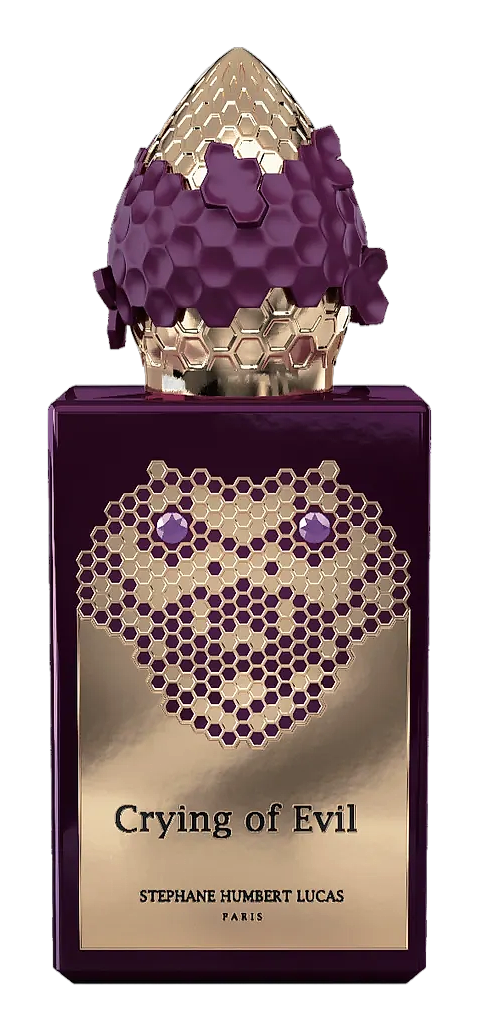
Crying of Evil draws from Baudelaire's most notorious collection, the one that challenged readers in 1857. Stéphane Humbert Lucas references the poems directly, building on the tension they create between pleasure and discomfort, tangled together, impossible to separate. The name itself hints at beauty that costs something, poetry that takes from the reader as much as it gives. La Collection Serpent provides the framework, but Crying of Evil stands alone. The fragrance opens with red berries and violet, a sweetness that feels almost innocent, before leather enters to complicate things. Then rose appears in the heart, not softening the leather but holding it in tension with sandalwood that keeps everything grounded.
The note structure makes the tension literal. Red berries and violet give the opening a sweetness that feels almost innocent, a false start. Then leather enters. Not an assault. Something darker, quieter. The rose in the heart doesn't soften the leather; it complicates it. Sandalwood keeps everything from tipping into aggression. By the time amber and frankincense arrive in the drydown, the fragrance has made its argument: beauty was never the point. The experience was.
The evolution
The first ten minutes belong to violet and red berries, a sweetness that could almost pass for safe. Almost. Then the leather arrives. Not the bright leather of a new bag, something more worn, more intimate. The rose appears within the hour, not as decoration but as tension, holding the leather and the sandalwood in a strange kind of conversation. By the third hour, the frankincense has fully arrived. Smoke, but not aggressive. Warm. Resinous. This is where the fragrance lives longest, the amber-patchouli base holding court while the florals fade to memory. The musk stays. On fabric, it lingers until the next day. On skin, it's a ghost you keep finding.
Cultural impact
Crying of Evil occupies a specific space: wearable darkness. The fragrance takes Baudelaire's exploration of beauty and suffering and translates it into something you can experience on skin. It exists in a particular corner of the fragrance world, appealing to those who want something with real complexity, something that doesn't apologize for making its point.