The Story
Why it exists.
The beginning
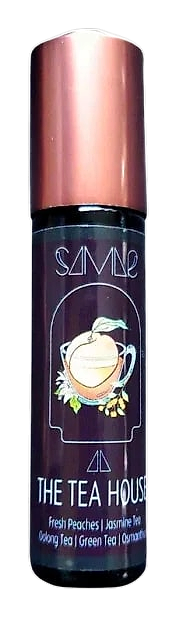
The Tea House came from Samar, the perfume studio founded by Na-Moya Lawrence and Debbie Lin. It grew from a creative impulse that shaped the brand from the start: a restlessness with the usual archetypes dominating mainstream fragrance, and a desire for something with actual atmosphere. The two build oil-based fragrances that read like small, immersive scenes. The Tea House takes the memory of a tea room, warm ceramic, steam, fruit on a wooden table, and treats it as a complete emotional environment, not a list of pleasant notes. The composition is built around the idea of a small atmospheric world, a scent designed for stillness rather than spectacle, something that rewards close attention.
What's unusual here is how the structure works without announcing itself. The composition stays restrained and self-contained, never leaning on the heavy base notes that usually anchor a fragrance in amber or musk. Three teas, green, oolong, and jasmine, share space with osmanthus and peach, and the result is a scent that stays close to the skin rather than projecting outward. The osmanthus is what holds everything together.
The evolution
The opening is green, almost verdant, the way a just-picked leaf smells. Green tea and jasmine arrive first, cool and slightly aqueous, with oolong sitting underneath giving the whole thing a warm undertone. The first minutes feel clean, a little brisk, more water than flavor. As the minutes pass, the osmanthus starts working. The jasmine softens and warms, osmanthus lends its apricot-honeysuckle quality, and the whole composition shifts from steeped leaf to something rounder, creamier, like the second steep when the real character of the tea comes through. Eventually, peach settles in, and the scent sits closer to skin, soft, faintly sweet but never syrupy. The base is quiet. There's no big resinous anchor, no heavy musk. Just peach and the ghost of the teas, a soft trace that lasts through the day.
Cultural impact
The Tea House sits at a specific point in indie fragrance, choosing to build its entire identity around tea rather than the gourmand sweetness that often dominates the format or the aquatic freshness of mainstream releases. Wearers describe it as the scent of someone who has already settled into the evening, not the one walking in. It reads as quietly confident, emotionally specific, a fragrance that doesn't need to announce itself to do its work. In a market crowded with loud compositions designed to project across a room, The Tea House does the opposite. It keeps its voice low, its sillage close, its references specific.