
The Story
Why it exists.
The beginning
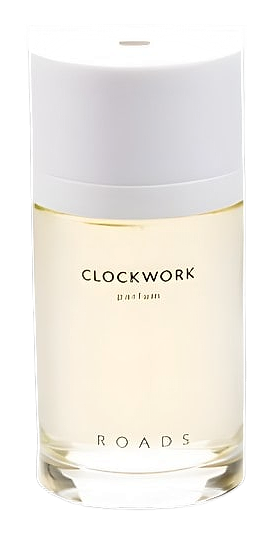
Clockwork arrived in 2014 as part of Roads' founding trio alongside Harmattan and Neon, CharlAmbre's debut with the house. The brief was straightforward: translate the idea of mechanical precision into something you could wear. Not cold. Not clinical. Just the feeling of things working exactly as they should, with enough warmth underneath to keep it human.
CharlAmbre built Clockwork around a specific tension, the bright, almost metallic citrus-pepper opening suggests machinery, a system. Then the cedar-fir heart softens it into something organic. The violet leaf keeps the green honest. The real decision, though, was the oakmoss. By 2014 many houses were pulling back. Roads kept it. In Clockwork it does the quiet work of making the drydown feel rooted, not floating.
The evolution
The opening doesn't whisper. Bergamot zest, lemon, black pepper, and nutmeg arrive together, a sharp, slightly nutty burst that reads almost metallic for the first five minutes. Think the click of a crown being set. Then citrus fades and the heart takes over: cedarwood and fir balsam, warm and resinous. The violet leaf adds a dry, papery green. This phase lasts the longest, three to four hours of clean, slightly austere wood. The drydown belongs to vetiver and oakmoss. Vanilla and amber soften everything, but the moss keeps it grounded. Ten hours on most skin. The next morning: a faint, earthy warmth that stays close to the skin.
Cultural impact
Clockwork sits in Roads' catalogue as the clear, uncomplicated counterweight to the house's more atmospheric later work. Released alongside Harmattan and Neon in 2014, it was praised for its straightforward structure, a quality that set it apart from the over-layered niche releases of that era. Among Roads' lineup, it occupies the middle ground: neither as bright as Neon nor as muted as White Noise or End Game. The fragrance works well as an entry point to the brand.