The Story
Why it exists.
The beginning
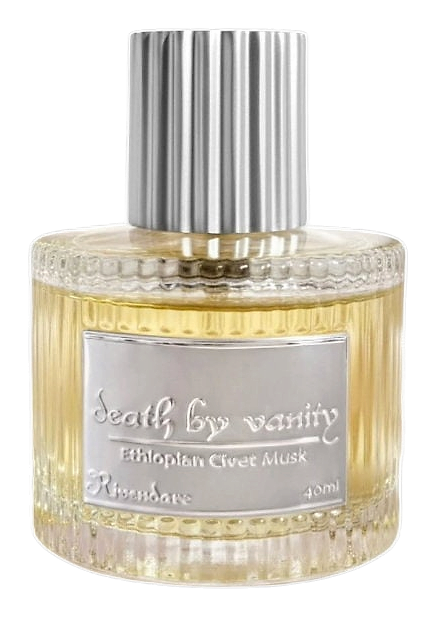
Death by Vanity draws on a long history of toxic beauty rituals, and the brand copy leans into that lineage without flinching. The brand's own description frames it through ceruse, the chalky white paint associated with an alabaster glow, noting those who lost their lives in pursuit of that ideal. Beauty was never supposed to be. The perfumer, David Clarke, treats that history not as costume but as material: the chalky weight of ceruse becomes powder, the hidden danger becomes civet and coumarin working beneath a powdered surface. Released in 2025 as a limited release of just 40 numbered bottles, the fragrance treats vanity as something worth investigating, something that leaves a mark.
What makes this composition unusual is its refusal to stay decorative. Clarke builds the powder around coumarin, a material that reads as warm, sweet, and faintly medicinal, and civet, which adds a skanky, almost bodily warmth to what could have been a purely pretty scent. The rosewood and oakmoss in the structure pull it toward old-school chypre territory, which means the powder here has weight and shadow rather than floating off the skin like talc.
The evolution
The first thirty minutes are all surface. Heliotrope arrives immediately, sweet and almond-like, with rosewood giving it a faint woody pinkness underneath. It smells like cracking open an old face powder compact, the kind that has been sitting in a drawer long enough to pick up the scent of paper and dried petals. Then something shifts. Coumarin rises, and the sweetness gains a warmer, almost tonka-like density, as though the powder is being mixed with warm cream. Around the two-hour mark, the civet makes itself known. It's not loud or fecal in the way some animalic notes go. Here it's aged, almost suede-like, lending the composition a warmth that reads like skin rather than fur. By hour four you're firmly in the drydown: musk softens everything into a clean, intimate second skin, and oakmoss grounds the sweetness with a damp, earthy bitterness.
Cultural impact
Released in 2025 as part of Rivendare's limited numbered series, Death by Vanity sits as a small-batch indie release that treats fragrance as material worth investigating. It won the Artisan Award at the 2026 Art and Olfaction Awards, a recognition that places it within a community of independent perfumers working outside the mainstream release calendar. The 40-bottle production run underscores the limited nature of the release, and the numbered bottles mark each one as an individual object rather than a mass-produced SKU.