The Story
Why it exists.
The beginning
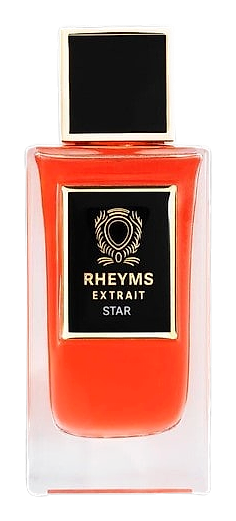
Star arrived in 1953 from the Borsari house in Parma, but its roots stretch back further. The scent first appeared in 1930 under the name Stella Azzurra, was renamed, and returned to shelves twenty-three years later bearing new clothes and the same Italian soul. Released when postwar Italy was rebuilding its idea of femininity, it belongs to an era when florals did real work: no spectacle, no statement, just scent built to outlast a long afternoon and a longer evening. The house itself dates its founding to 1870, born from Ludovico Borsari's barbering practice in Parma, where attention to one client at a time taught a perfumer how to listen. Star carries that same one-person-at-a-time patience into a bottle.
What's worth knowing about Star is what's left unsaid. The composition reads as a single floral note on paper, but that's a 1953-era shorthand for a bouquet assembled from the Emilian plain's botanicals, rather than a single distilled essence. Borsari built its catalog around what grew nearby, citrus and florals pulled from regional crops rather than shipped from distant origins. Star fits that working philosophy: no exotic declarations, no imported drama. Just a flower accord built close to home, the kind of scent that survives because it never tried to be more than itself. The vintage relaunch strategy is the interesting part.
The evolution
Star opens with a lift you barely feel, a petal-soft gesture rather than a citrus snap. The first twenty minutes hover near the skin, floral and powder-adjacent, reading almost like a memory of perfume rather than the thing itself. That restraint is deliberate. Around the ninety-minute mark the heart warms, the accord roundens, and a faint honeyed sweetness surfaces beneath the floral line, nothing loud, nothing announced. The drydown is where Star earns its longevity. What arrives in hour four is a soft, creamy warmth that clings to the collar and the inside of the wrist for hours longer than expected. On fabric the next morning, it reads as a trace of a person who was once in the room. The sillage stays close throughout, moderate rather than projected, which is precisely the point. This is a scent that rewards patience over performance.
Cultural impact
Star belongs to a quieter register of mid-century Italian perfumery, the kind never marketed as revolutionary. It carries no fashion-house halo, no celebrity face, no campaign to anchor it to a moment. What it offers instead is a working floral in the old Parma tradition, the sort of composition a woman might have worn to Sunday lunch and then again to the opera without thinking twice. Its discontinued status makes it a discovery rather than a recommendation, something found in a vintage shop or a dusty Italian pharmacy shelf rather than on a counter. For collectors of postwar European florals, Star represents the kind of house style that doesn't perform. It simply persists.
The House
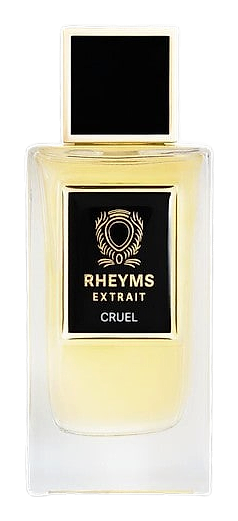
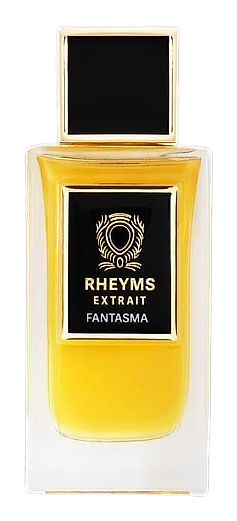
RheymsRheyms is an Italian niche perfumery house that debuted its first fragrance collection in 2024. The brand operates from Italy and produces its scents by hand, positioning itself within the artisanal end of the niche fragrance market. Its debut lineup includes Cruel, Fantasma, Ombra, Arabian, and Star, a five-piece range that signals the breadth of moods the house intends to explore. Rheyms sells through its own website, rheyms.com, and through select stockists, reaching fragrance enthusiasts who seek out smaller, independent labels.
The Creator
Vincenzo ArpaiaNo completed fragrance or specific signature technique is confirmed in the available material, so a precise description of Arpaia’s finished style would be speculative. What can be said is that his training points toward clarity, structure and a close reading of natural materi…