
The Story
Why it exists.
The beginning
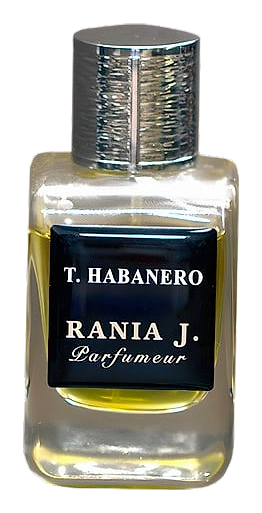
T. Habanero is Rania Jouaneh channeling two worlds she knows intimately, the smoke-drenched warmth of Cuban evenings and the deep, resinous traditions of Middle Eastern perfumery. The name itself is a dare: habanero peppers don't whisper. Neither does this fragrance. She chose instead to let the oud and myrrh anchor the composition in something darker, stranger, and more honest. The Cuban reference isn't literal, it's a mood, a temperature, a moment after midnight when the conversation gets real and someone's lighting another candle. T. Habanero captures that.
What makes this composition work is the tension between the spices and the base. Cardamom, black pepper, and pink pepper open sharp and aromatic, they grab attention before the tobacco even arrives. Then the heart is pure tobacco, dense and slightly sweet, the kind that doesn't apologize for what it is. The base is where Jouaneh's heritage surfaces most clearly: oud and myrrh bring the depth and resinous warmth, leather adds structure, and sandalwood keeps everything from becoming too heavy. Incense threads through the whole drydown, making the smoke feel intentional rather than accidental. It's a pyramid that rewards patience, the real work happens after the first hour.
The evolution
The opening hits fast: cardamom's green warmth immediately followed by the black and pink pepper bite. It reads bright for the first fifteen minutes, almost citrus-like in its energy. Then the tobacco announces itself at the heart, not a whisper, not a suggestion, but a full presence that takes over the composition. The peppers soften but don't disappear; they become part of the background. By hour three, the oud and myrrh arrive at the base, and the smoke becomes the dominant narrative. Leather and sandalwood settle close to the skin, adding warmth without sweetness. The drydown holds well on most skin types, with the oud and incense lingering longest, present the next morning if you applied heavily the night before.
Cultural impact
T. Habanero occupies a specific corner of niche perfumery: bold enough to be a statement, complex enough to reward attention. It leans into smoky-dark intensity that the Cuban evening reference implies. The fragrance arrived in 2014, and wearers who connect with it tend to do so deeply, describing it as a fragrance that changes how a room feels rather than just how they smell. There's a weight to the way it fills a space, a presence that lingers in the air long after someone passes through.