
The Story
Why it exists.
The beginning
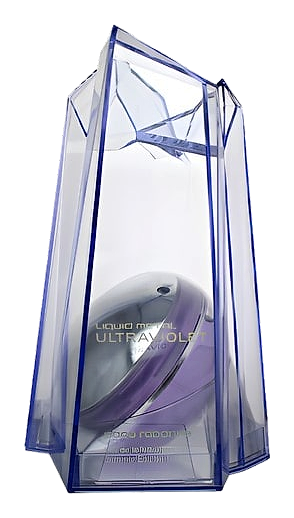
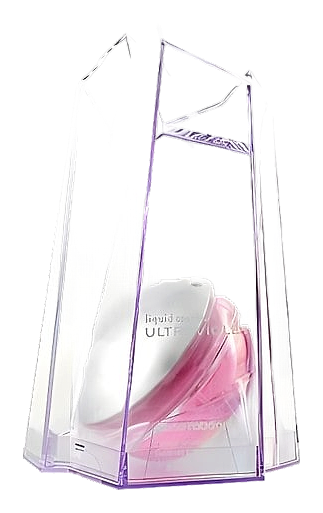
Rabanne released Ultraviolet Liquid Crystal Woman in 2003 as part of a fragrance collection that played with light, translucence, and cool atmospheric effect. The name itself signals something synthetic yet crystalline, liquid structured by light, a material that catches and refracts rather than absorbs. In the early 2000s, the house was expanding its fragrance portfolio across multiple directions, testing contrasts between freshness and warmth, between the aquatic boom of that era and something more grounded. This was one of those directions: an ozonic-floral built on cool transparency and finished with an earthy, mossy drydown that refused to stay delicate. The ambition was clear, a fragrance that began in light and arrived somewhere rooted.
The most interesting thing about Liquid Crystal Woman isn't any single note, it's how the structure holds together. The violet leaf in the top accord does something unusual: it keeps the ozonic lift from becoming purely synthetic. Without that green, dewy quality threading through the melon and lemon, the opening would read flat and metallic. With it, there's a freshness that feels more atmospheric than aqueous. Then the heart, jasmine paired with mint, is where the composition reveals its era. That jasmine-mint combination was everywhere in the late 1990s and early 2000s, used to add aromatic depth to florals without heaviness.
The evolution
The opening hits bright and ozonic, that melon and lemon burst with the characteristic aquatic shimmer of early 2000s perfumery. The violet leaf keeps it from being pure synthetic; there's a cool, green crispness underneath that reads almost mineral. Thirty minutes in, the heart takes over. Jasmine and osmanthus arrive quietly, mint threading through with something aromatic and slightly cool. The jasmine doesn't dominate, it's present, warm, but the mint keeps it honest. By the drydown, most of the shimmer is gone. The vetiver and moss carry the composition into its last act, an earthy, green, slightly mossy finish that's more natural than the opening suggested. This is where it becomes personal. The drydown sits close, intimate, the moss and vetiver lingering on the skin for a few more hours, fading slowly.
Cultural impact
Released in 2003 as part of the early 2000s wave of aquatic and ozonic fragrances that dominated that era's perfumery. The scent polarized, some found the ozonic-fresh quality addictive and nostalgic, others found it too synthetic. What nobody disputes is that it's specific: a cool, mossy, translucent floral that doesn't smell like anything still in production. The discontinuation has only sharpened its appeal among collectors chasing that early 2000s freshness, vetiver and moss as the structural finish, not a safe compromise.