
The Story
Why it exists.
The beginning
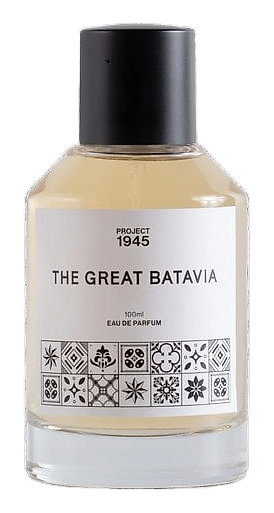
The Great Batavia takes its name from the Dutch colonial-era designation for present-day Jakarta, the port city where Indonesian spices once flowed outward into the world. Project 1945 built its entire philosophy around temporal cartography, selecting moments in history as the creative spine of each fragrance rather than mood or emotion. This one maps back to a specific era of trade, humidity, and cultural collision. Perfumer Miroslav Petkov worked with Indonesian-sourced materials, patchouli, clove, elemi resin, to reconstruct the sensory weight of that time and place. The result is not a nostalgia piece. It's an argument that geography carries olfactory memory, and that memory can be recaptured in liquid form.
What makes this composition unusual is its structural tension. The opening, watermelon, mint, apple, lemon, reads as bright and almost synthetic in its clarity. Cool in a way that feels designed. Then Indonesian clove and elemi resin arrive and shift everything. Clove carries weight; it smells like history, like medicine cabinets and spice markets and old wood. Elemi, with its citrusy-resinous character, bridges the gap between the cool top and warm heart so smoothly you don't notice the transition until you're inside it. Geranium and lavender follow, adding an aromatic-green dimension that could read masculine in lesser hands but here stays neutral and interesting.
The evolution
The opening hits fast: watermelon and mint together create an immediate cool, almost electric clarity. Lemon brightens without softening. Watermelon in fragrance doesn't smell like the fruit, it smells like the idea of it, cold and watery, a heat-break in olfactory form. The mint cuts the sweetness. You have maybe forty-five minutes before the heart takes over. Then the handoff. Indonesian clove announces itself with the kind of authority that shifts the entire character. Elemi resin smooths the transition, its citrus-resinous quality acts like a bridge, so the warmth doesn't jar. Geranium adds a green-rosy dimension, and lavender brings unexpected herbaceousness. The combination is warm, aromatic, slightly medicinal. It reads as complex rather than heavy. The drydown arrives gradually. Indonesian patchouli and moss create a cool-earthy base, but tonka bean and vanilla creep in slowly, sweetening without becoming soft. This is the payoff, vanilla warmth on warm skin, patchouli that stays close and personal.
Cultural impact
Project 1945 occupies an unusual position in contemporary fragrance, it bridges Indonesian geographic identity with Western perfumery conventions, using warm spice and aromatic accords that appeal broadly while sourcing materials from the Spice Islands that give each composition geographic specificity. The Great Batavia, as the inaugural release, established the house's thesis: that places carry olfactory identities that persist across time. Without widespread press coverage or established community discussion, the fragrance's cultural footprint remains to be written, but the concept alone places it among fragrance houses working in narrative-adjacent territory.