
The Story
Why it exists.
The beginning
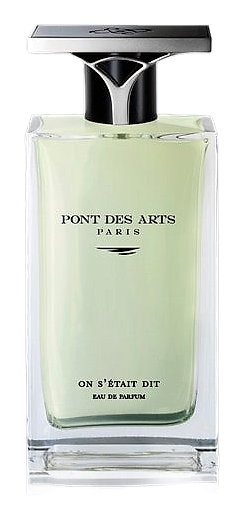
Pont des Arts named this one after a quiet kind of promise, "on s'était dit," the French for "we had told ourselves." It evokes the weight of a whispered agreement, something spoken softly that carries more gravity than its volume suggests. Composed by Vincent Grandjon, the fragrance was built to capture that tension between intention and spontaneity, between the cool clarity of citrus and the warmer, more complicated territory waiting beneath it. The opening draws on kumquat and mandarin for brightness, the tart almost-bitter snap of the former balanced against the rounder sweetness of the latter.
What sets On S'était Dit apart is how the spices refuse to behave as a typical middle act. Caraway, cardamom, nutmeg, pepper, and carrot seeds stack up like an argument among close friends, each one distinct but pushing toward the same conclusion. Carrot seed in particular is an unusual player in this category, earthy, slightly hay-like, and far less common than the nutmeg-and-pepper duo you'd expect. Grandjon let it carry the brightness of kumquat and mandarin into the denser, drier territory of patchouli and tree bark.
The evolution
The first fifteen minutes belong entirely to the citrus. Kumquat brings a tart, almost bitter edge, less sweet than orange, more curious than lemon, and the mandarin smooths the corners just enough to keep it wearable. The fruit feels fresh, not candied, almost like biting into something still cold from the morning market. Around the twenty-minute mark, the spices begin their slow takeover. Caraway arrives first, green and slightly anise-like, followed quickly by nutmeg's warmth and black pepper's quiet insistence. Carrot seed hums underneath, adding a dry, earthy sweetness that keeps the spices from tipping into cologne territory. By the one-hour mark, the citrus is a memory and the spices have settled into something richer, warmer, and more grounded.
Cultural impact
On S'était Dit carries a name that does quiet work for anyone who speaks French, and signals something specific even to those who don't. "On s'était dit" translates roughly as "we had told ourselves," a construction that implies a shared understanding reached without needing to spell it out. There's an intimacy in the phrasing, the suggestion of two people arriving at the same thought independently and recognizing it in each other. That's a literary register, and it colors how the fragrance tends to be talked about among people who've spent time with it. The composition itself supports that reading.