
The Story
Why it exists.
The beginning
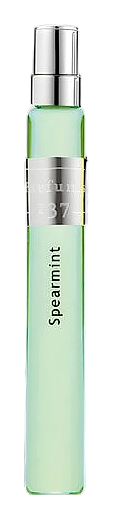
A late summer morning on a Paris balcony. Spearmint arrived as part of the brand's founding collection, seven fragrances launched in 2013, each built around a single botanical study. The house believed an ingredient reveals its true character when stripped of unnecessary layers. Corinne Cachen chose spearmint for its bright, clarifying quality. Something that lifts the mood without overwhelming it.
What makes Spearmint interesting isn't the mint itself, it's the structural role the mint plays. Rather than arriving as a blast or a cooling agent, spearmint becomes atmosphere. It sets the temperature of the composition without dominating it. The geranium and jasmine that arrive alongside it don't fight the mint; they hold it in place. Cedar and patchouli eventually take over, but the mint's coolness lingers in their texture. This is mint as architecture, not mint as statement.
The evolution
The opening hits sharp, grapefruit and orange arrive with a brightness that feels almost aggressive in the first five minutes. A flash of citrus pith, the kind that makes you lean in. Then it softens. The spearmint, the reason this fragrance exists, doesn't arrive with fanfare. It settles into the middle alongside geranium and jasmine. The florals don't sweeten so much as deepen. This is mint as atmosphere, not mint as statement. Cedar and patchouli eventually arrive, and the mint finds its final form in the base, cooled, softened, warmed by wood. Close to the skin, three hours in, it's still there. Quiet work. The longevity won't outlast a full workday, but for a summer daily wear, that feels appropriate, present when you need it, gone when you don't.
Cultural impact
Part of a house that values depth over flash. The 2013 single-note series appeals to collectors who want to study an ingredient rather than wear a statement. Parfums 137 emerged in Paris with a transparent approach to fragrance-making, releasing seven scents simultaneously as an educational project. Each fragrance ships with documentation explaining its key ingredient's botanical origin and extraction method. This scholarly framing attracted enthusiasts who view scent as a learning experience rather than a luxury commodity.