The Story
Why it exists.
The beginning
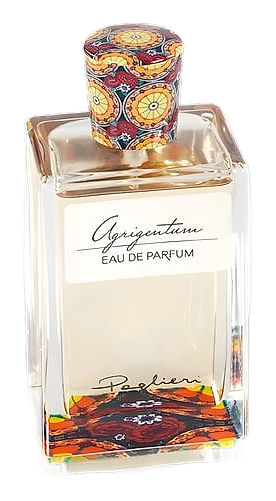
Agrigentum takes its name from the ancient city on Sicily's southern coast, home to the Valley of the Temples, where Greek columns still stand among carob trees and wildflowers. In February, the valley celebrates the Sagra del Mandorlo in Fiore, when almond blossoms erupt in drifts of white and pink against the pale limestone ruins. It is a moment of extraordinary beauty, fleeting and fragrant. That is what Henri Bergia and Eric Fracapane set out to bottle in 2016: not just a scent, but a specific Sicilian emotion, the particular warmth of standing among ancient stones while blossoms fall around you.
The composition hinges on a clever tension: gourmand and powdery. Almond and praline give it sweetness, yes, but violet and jasmine pull it toward something more refined, almost vintage in feel. Ylang-ylang bridges the gap, tropical and heady on its own, but here used for its waxy, golden warmth rather than its tropical punch. The patchouli is barely there, just enough to keep the vanilla honest and prevent the whole thing from floating away. It is, essentially, a powder-lover's gourmand or a gourmand-lover's powder. Depending on which camp you occupy, that either sounds perfect or slightly confusing. In practice, it works.
The evolution
The opening is all citrus clarity, lemon zest, mandarin juice. Clean for about five minutes. Then the almond arrives, not sharp but soft, like marzipan dissolving on the tongue. The violet follows quickly, powder-soft, arriving on skin like the moment a church bell sounds in the distance. Within twenty minutes, you're in the heart: jasmine and ylang-ylang, jasmine dominant, ylang-ylang the golden thread that keeps everything connected. This phase lasts two to three hours. Then the base takes over slowly, praline first, tonka second, vanilla third, patchouli barely whispering beneath. By hour five, you're left with warm vanilla and faint praline, skin-close and intimate. On fabric, it lingers until the next wash.
Cultural impact
Agrigentum occupies an interesting middle ground: sweet enough to attract the gourmand-curious, powdery enough to appeal to violet lovers, Italian enough to feel distinct from the French-oriental mainstream. It doesn't shout. It wears like a preference, not a statement. Its restraint reflects a quieter Italian sensibility increasingly rare in a market dominated by loud, performative fragrances.