
The Story
Why it exists.
The beginning
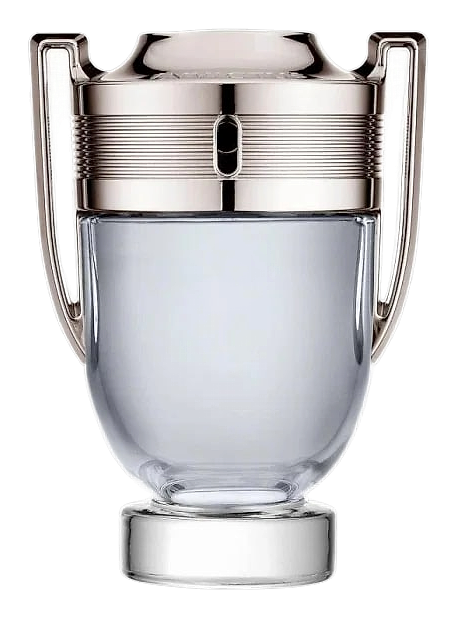
Invictus arrived in 2013 as a fresh-aquatic from the house of Paco Rabanne, presented as an eau de Parfum. The name is drawn from Latin, and the brief went out to four perfumers who each brought a different approach to the project: Véronique Nyberg, Anne Flipo, Olivier Polge, and Dominique Ropion. Working from a shared concept, the team built a composition that opened with marine and grapefruit notes, passed through a heart of bay leaf and jasmine, and settled into a warm woody base of ambergris, guaiac wood, oakmoss, and patchouli. The result was a bright, projecting masculine that pulled aquatics out of the background and into the main room of mainstream fragrance.
What makes the structure unusual is the contrast the perfumers leaned into. Marine notes and grapefruit handle the opening, a combination that reads cool and citrus-bright on skin, with a synthetic shimmer that catches the light. Then bay leaf and jasmine arrive in the heart, introducing a green, slightly bitter herbal edge that keeps the sweetness from tipping over. The base of ambergris, guaiac wood, oakmoss, and patchouli grounds everything in warm, slightly dirty woodiness, with the patchouli smoldering underneath the clean astringency of the oakmoss.
The evolution
The first fifteen minutes belong to grapefruit and the marine accord, a sharp, almost synthetic burst that reads cold and electric on skin. It is the loudest the fragrance gets, and for many wearers, the most divisive. The bay leaf and jasmine step in around the thirty-minute mark, softening the brightness with a green, slightly soapy warmth that carries a clean, herbal musk. By the second hour, the composition settles fully into its base. Ambergris and guaiac wood take the lead, with patchouli running underneath and oakmoss giving it a mossy depth. The drydown is where Invictus shows its staying power. It pulls away from the aquatic opening and rearranges itself around the woods, with the grapefruit fading into a quiet sourness behind the jasmine.
Cultural impact
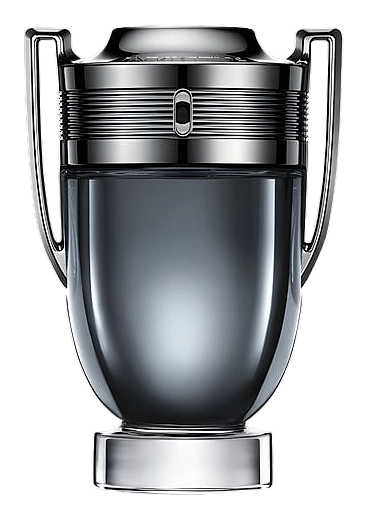
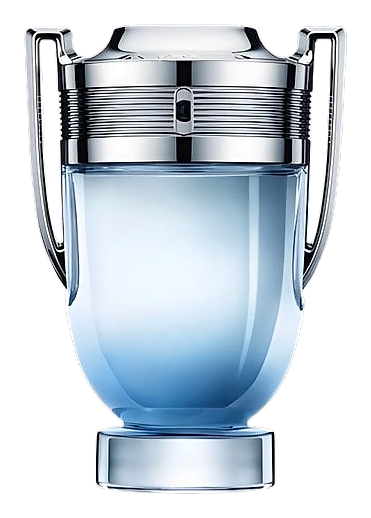
Invictus became one of the recognizable masculine fresh-aquatics released in the early 2010s, helping the aquatic category reach a much wider audience. Its trophy-shaped bottle, designed by Cédric Ragot, turned the flacon into a recognizable object that landed on vanities and in collection posts across fragrance communities. Wearers tend to gravitate toward it for casual confidence, gym sessions, and warm-weather nights rather than formal occasions, and the scent has since expanded into flankers including Invictus Intense and Invictus Aqua, as well as a higher-concentration Parfum version.