
The Story
Why it exists.
The beginning
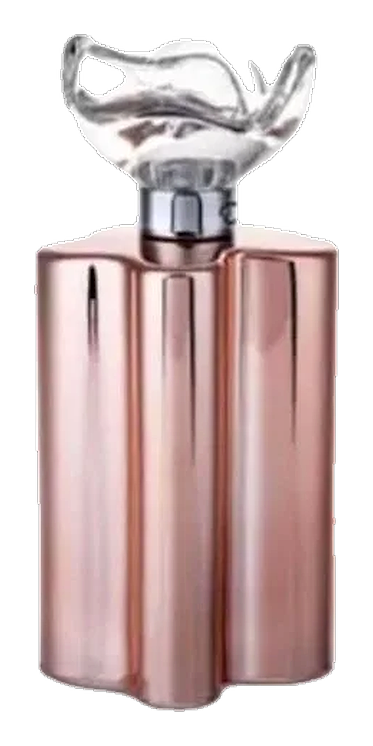
Jivago, the Beverly Hills house founded in 1994, built its identity on gold-tinged bottles and emotionally resonant compositions. Rose Gold arrived in 2012 as an explicit gesture toward modern romance, capturing the way contemporary love stories balance lightness with depth, freshness with sensuality. The perfumer understood that a rose fragrance need not be heavy to be passionate, and structured the opening to announce itself with crystalline clarity before allowing the heart to bloom.
The note selection reflects a philosophy that romance today is multifaceted, not singular. Freesia and lily of the valley provide the contemporary freshness expected of a modern launch, while pear adds a touch of unexpected brightness. Peony bridges the gap between the familiar and the aspirational, carrying cultural weight without heaviness. The rose in the heart is not a statement rose but a supporting one, present to lend depth rather than dominate. Finally, the musk and white amber base acknowledges that the most powerful romantic moments are often the quietest.
The evolution
The fragrance moves from the bright, almost crystalline quality of its opening (where freesia and pear create an immediate sparkle) through a heart that feels like a garden in full morning bloom. The transition is seamless because both stages share a certain transparency. The drydown represents the fragrance's most Intimate moment, when the initial brightness has softened and the musk-white amber base creates a warm, close sensation that echoes the way a rose itself holds its scent close to its petals rather than projecting it outward.
Cultural impact
Since its 2012 debut, Rose Gold has become a go‑to for women who want a vibrant, flirtatious scent that balances bright fruit with a sensual, erotic drydown, often mentioned alongside Jivago’s other gold‑themed releases in boutique conversations. Its popularity has inspired seasonal limited editions and fan‑made mixes, cementing its role as a modern classic in boutique collections.