
The Story
Why it exists.
The beginning
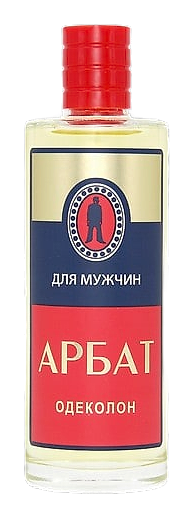
The Arbat is a street in Moscow's historic center, and it has been a reference point in Russian culture for generations, romantic, literary, slightly dangerous in the way that beloved places become. Novaya Zarya named this 1970 composition after it, which tells you exactly what the perfumers were after: not a scent, but a specific Moscow feeling. The street itself had evolved from aristocratic neighborhood to bohemian quarter to a place where memory lived in the cobblestones. Naming a fragrance for it was a claim about identity and place. The house has always treated fragrance as cultural translation, and Arbat is one of its more direct statements, a men's scent named for a specific location, asking to be worn as a kind of inhabitation rather than decoration.
The composition leans into a classic chypre fougere structure that was extremely common in men's fragrances of the era, but the execution tells a different story. The top is brisk and citrus-forward, the heart introduces a green-spicy tension that keeps things from sliding into sweet territory, and the base, anchored by oakmoss rather than the synthetic mosses of later reformulations, holds that dry, slightly bitter character long after the bergamot has gone quiet. For a fragrance to retain this level of oakmoss character in the base, given the restrictions that came later, is part of what makes the original formula interesting as a period piece. This is what chypre fougere smelled like before it was diluted.
The evolution
It opens bright. Mandarin and bergamot arrive together, the kind of citrus that doesn't announce itself, it just fills the immediate space around you with clean air. Lavender follows within minutes, softening the edges, making the whole thing feel like morning light through a window. Sage arrives quietly, herbal and slightly camphoraceous, and then the hand-off begins. The heart phase is where Arbat becomes itself. Violet leaf introduces a green, slightly metallic tension that contrasts sharply with the warmth of the opening. Black pepper appears in small, dry bursts, not heat, but texture. Patchouli sits beneath it all, earthy and unresolved, the kind of patchouli that hasn't been sweetened for Western markets. This is the most interesting twenty minutes of the fragrance. The drydown takes its time arriving, but when it does, the payoff is the oakmoss. It doesn't overwhelm, it wasn't designed to, but it threads through the sandalwood and amber like a bass note that refuses to fade. Musk keeps it close to the skin.
Cultural impact
Arbat occupies a peculiar position in the landscape of men's fragrance: a Soviet-era chypre fougere still in production, named for one of Moscow's most mythologized streets. For collectors of vintage and heritage scents, it represents a rare opportunity to encounter a composition that predates the oakmoss restrictions that fundamentally altered the chypre family. The fragrance is not widely discussed in English-language fragrance communities, which is part of its appeal, it has not been analyzed, rated, and categorized into irrelevance. Those who find it tend to have strong reactions, either embracing its dry, oakmoss-forward character or finding it too dated for contemporary wear.