
The Story
Why it exists.
The beginning
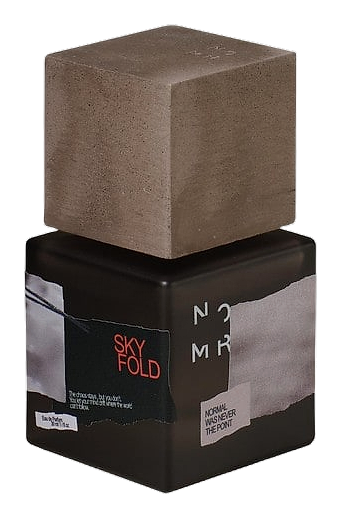
Skyfold came together in 2025 under the hand of perfumer Anunsith Wongkornvanich, part of the Trace and Time collection. The composition settles into a particular register that few iris-led fragrances visit so willingly: a winter evening sky, layered clouds, the slow fade of light into something softer, and the in-between hour when day surrenders to night and the air turns that particular shade of blue-violet. Wongkornvanich's brief was atmospheric, a fragrance that captures a specific transition, and the result reads as cold and expansive rather than the warmer spice or denser resin register you might expect from a composition pitched at evening wear. The name grounds the whole thing quietly.
The composition's anchor is iris, a material that famously reads both mineral and powdery, both cold and deeply human. Wongkornvanich frames it with aldehydes on top, sharp and effervescent, and ozonic notes that widen the space around the iris so it doesn't collapse into cosmetics. The violet and raspberry in the heart add bruise and sweetness without tipping the powder toward lipstick. Down below, ambrette seed and ambroxan build a musky, second-skin warmth that keeps the whole thing wearable in cold weather. It is, structurally, a study in restraint, nine notes arranged to evoke weather more than ornament.
The evolution
The first ten minutes are loud by this fragrance's standards. Aldehydes strike bright, almost metallic, and the ozone expands like a window thrown open in winter. Carrot seed runs underneath, giving the opening a dry, earthy counterweight, like dust caught in cold light. The aldehydes don't disappear so much as they spread thin, leaving a static shimmer across the top of the composition. By the 30-minute mark, iris has taken over completely. It reads cold and powdery, a face powder you can almost see settling, with violet shadowing its edges. The raspberry is subtle, more suggestion than fruit, a sweetness that keeps the iris from going austere. This is the most wearable phase, the moment where the composition settles into its skin and stops performing for the room.
Cultural impact
Skyfold sits within an iris-led niche that has been quietly accumulating attention, a category where the brief tendrils of the flower get stretched into more abstract, atmospheric territory. Where some iris compositions lean cosmetic and powder-forward, Skyfold pushes colder, more synthetic, closer to ozonic florals than to anything rooted in vintage vanity. It reads as a more modern take on the iris template, less powder compact and more window left open to an empty sky. The composition treats iris as a vehicle for something ambient rather than nostalgic, and that shift changes who it speaks to.