
The Story
Why it exists.
The beginning
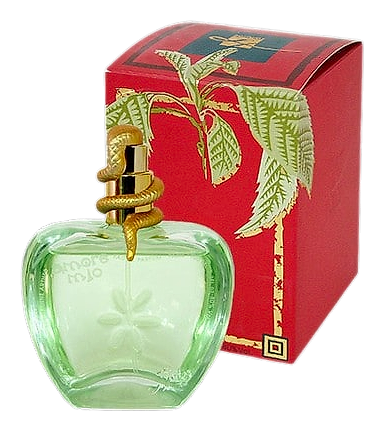
Nina arrived in 2006, the year Nina Ricci decided to bottle its most playful instinct. Launched as the first entry in the Les Belles de Nina collection, it traded the house's traditional powdered refinement for candied fruit and a bottle shaped like an apple, designed by Sylvie de France. It was a deliberate departure, and it worked because Nina Ricci knew exactly how to keep the sweetness from tipping into childishness. The gardenia does that work. The musk does the rest. This is a house that learned to be light without being trivial. The fragrance opens with a burst of lime and lemon, sharpened and bracing, reading almost edible before it settles into anything structured.
What makes the construction work isn't the apple itself but the precision around it. Lime and lemon supply acidity that keeps the sweetness from cloying. Gardenia adds a creamy, almost indolic fullness that elevates the fruit beyond confection. White cedar in the base gives an unexpected clean-linen quality, catching the musk's warmth and cooling it down. The result is a composition structured like a proper perfume, layered like a proper perfume, but wearing like a piece of candy. Few fruity florals achieve that balance. Most collapse into syrup.
The evolution
The opening is entirely citrus and sugar, lime cutting through candied apple with a sharp, almost edible clarity. It reads bracing, sharpened, immediate. As the minutes pass, the gardenia blooms underneath, and the sharpness rounds out into something creamier and fuller. The apple doesn't disappear; it just stops being the only thing talking. Eventually the citrus fades entirely, and you're left with gardenia, a whisper of apple fuzz, and the first hints of white cedar warming up against your skin. The base is where this fragrance becomes its quietest. Musk and cedar take over, softening the sweetness into something almost powdery and clean. What's left in the late hours is a skin musk barely tinted with residual fruit and florals, a trace of the opening sweetness still threading through the drydown.
Cultural impact
Nina belongs to a category of fruity-floral fragrances designed to be visually and olfactorily playful. The apple-shaped bottle, designed by Sylvie de France, made it unmistakable on a vanity, collectible in a way that few fragrance bottles achieve. It looked like nothing else in the Nina Ricci lineup, and that distinction carried the launch well beyond its olfactory profile alone. The fragrance itself wears younger than most Nina Ricci compositions, lighter and sweeter, closer to a confection than a couture statement. That accessibility is exactly what made it work.