
The Story
Why it exists.
The beginning
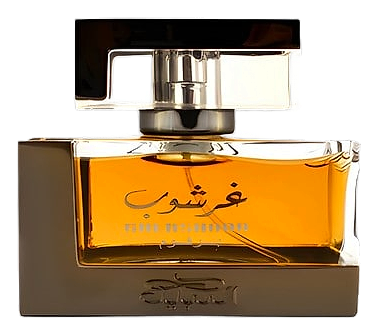
Ghershoob arrived in 2012 from Nabeel, a house whose catalog tends toward Arabic-leaning compositions where oils and resin-rich materials take center stage. The opening reads classical Gulf luxury: frankincense and rose, two notes that anchor the genre's most enduring traditions. But Nabeel didn't stop at tradition. They reached for cypriol and agarwood in the base, a pairing that pulls the scent toward something darker and more grounded than a straightforward rose and incense pairing. Saffron sits in the heart, sharp and expensive-feeling, the kind of detail that separates a considered composition from something more ordinary.
What's distinctive here is how the construction handles its density. Amber, guaiac wood, nagarmotha, and oud form a base that could easily become a wall of smoke, but the rose and geranium keep things breathing. There's a dialogue between the incense-driven top and the wood-heavy base, and saffron is the translator. It belongs to both worlds, sharp enough to cut through resin, warm enough to sit with wood. This is not a minimalist composition. It's built for skin that wants projection, for air that wants something in it.
The evolution
The first 30 minutes are frankincense and geranium, sharp and almost medicinal, with rose pushing through underneath like someone speaking from the next room. It feels liturgical, close to the skin, almost cold. Then the saffron arrives, and everything shifts. The composition warms. The rose becomes fuller, less green, and the incense steps back to make room. Somewhere around the 2-hour mark the base begins to surface, oud first, then nagarmotha's earthy smoke, then amber's resinous sweetness. The guaiac wood holds it all together like a frame. By hour 6 the scent has settled into something quieter and more private. The oud dominates, but it's not aggressive, it's the oud of a wool sweater, not a burning branch. On fabric the next morning, the amber and musk linger as a warm, skin-like trace.
Cultural impact
Ghershoob sits firmly in the tradition of Gulf oud compositions, a fragrance that assumes some familiarity with the genre's vocabulary. It's built for someone who already knows what nagarmotha smells like and wants a version that breathes well with rose. The composition doesn't soften its edges or translate its materials into something more accessible. It speaks in the language of resin and wood, saffron and geranium, and trusts the wearer to follow. What makes it engaging is how it handles those traditional materials without becoming predictable.