The Story
Why it exists.
The beginning
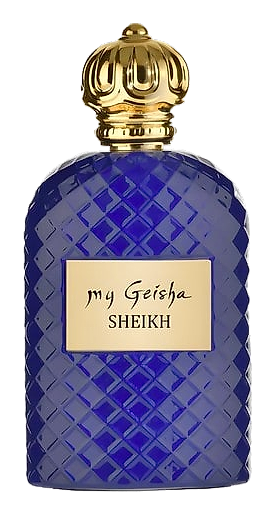
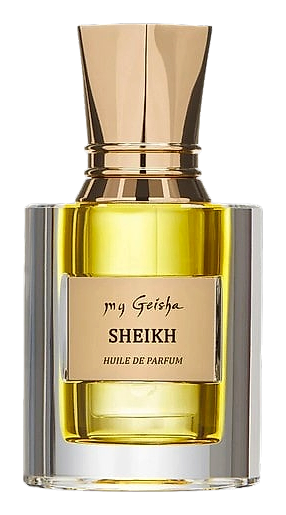
Sheikh doesn't whisper. My Geisha built it as a concentrated huile de parfum. Then the room shifts: amberwood, cinnamon, lavender bringing warmth and a flicker of smoke. The base grounds everything in cypriol, musk, and oud, the kind of materials that speak fluent authority. It reads royal because it means to. No ceremony required.
The pyramid mixes rose with oud, but here the rose never gets lost. Lemon keeps the top alive when the spice and lavender arrive, so the floral never collapses into heavy sweetness. Cypriol, sometimes called nagarmotha, adds an earthy, leathery root note that most Western compositions skip. It's the material that makes Sheikh smell less like a generic oriental and more like something with geographic memory.
The evolution
The first ten minutes belong to lemon and rose, almost too polite. Then cinnamon and lavender push in, and the warmth starts building. By the thirty-minute mark the oud has fully arrived, and it stays. The huile base means there is no sharp alcohol evaporation, just a slow thickening of the scent as hours pass. Sillage holds at arm's length for the first two or three hours before pulling closer. Around the sixth hour the musk and cypriol take over, and what remains is a low, woody warmth that clings to fabric the next morning. On clothes the next day, a faint rose-and-oud ghost that still smells intentional.
Cultural impact
Sheikh sits comfortably in the modern oriental-woody category that gained traction through the late 2010s and early 2020s, where rose-oud pairings became a kind of shorthand for refined authority. Wearers tend to be deliberate about scent, choosing this over louder mainstream releases because the huile format and the oud base signal a certain intentionality. It carries the visual language of formal wear without requiring it.