The Story
Why it exists.
The beginning
Renaissance takes its name from rebirth and the everyday pleasures worth reinventing. The fragrance reads like a small, deliberate ritual, the kind you build a weekend afternoon around. The name points to what the scent actually does on skin: it revives the familiar pleasure of sweet, spiced warmth and makes it feel freshly considered, not borrowed from somewhere else. Renaissance sits at the intersection of comfort and discovery, a scent about finding joy in the small, sweet rituals rather than chasing novelty for its own sake. It's the kind of fragrance that gets worn for the pleasure of wearing it, not for anyone else. There's something generous about that intent, a refusal to perform.
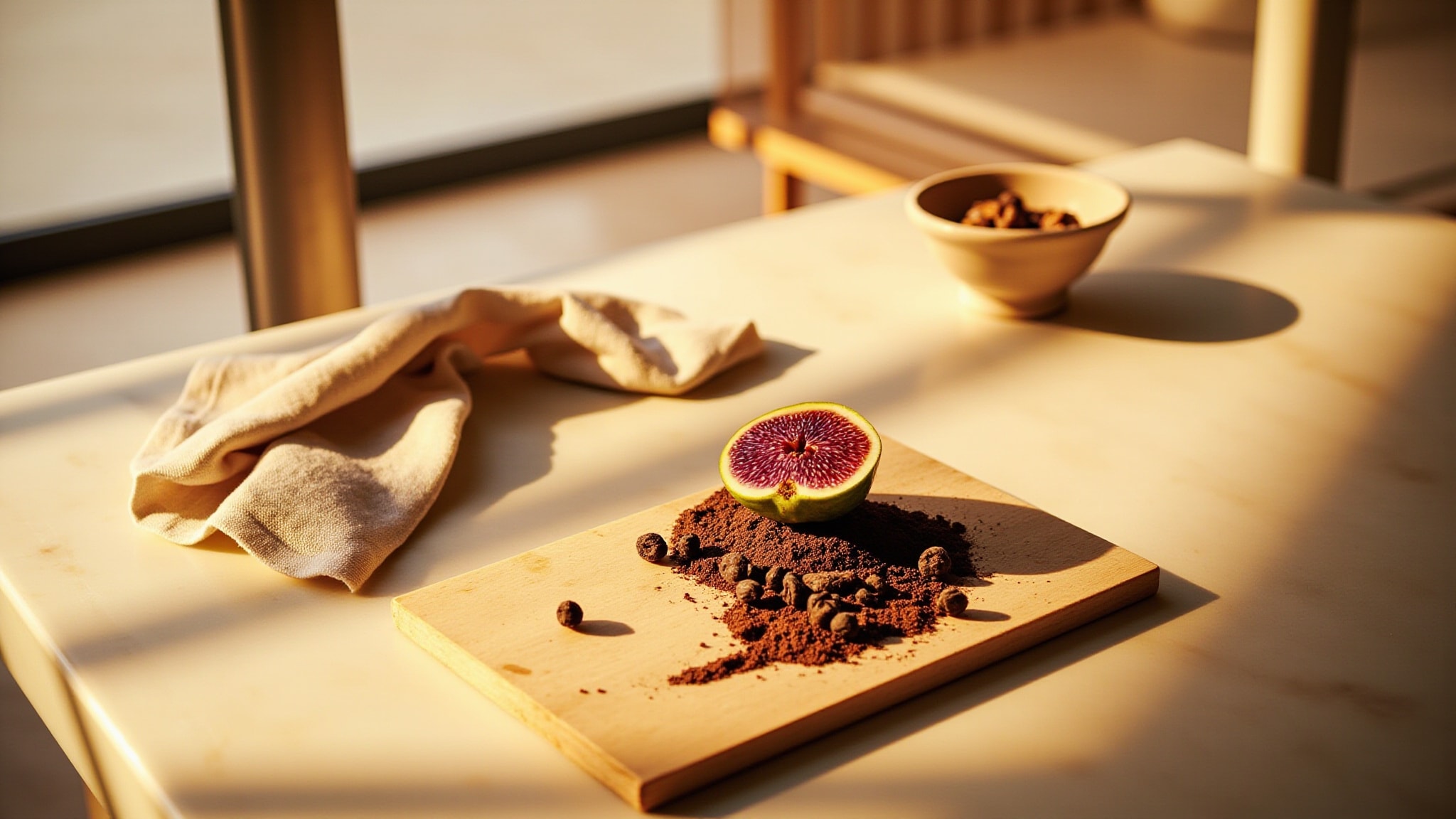
What makes Renaissance structurally interesting is how it stacks three different kinds of sweetness and makes them behave. Biscuit brings the baked, comforting layer, warm and golden-brown in character, the olfactory equivalent of a just-cooled shortbread. Fig adds a jammy, almost fruity depth that prevents the whole thing from feeling like dessert left out too long. Its dried-fruit quality adds chewiness and a faint earthy undertone that rounds the sweetness rather than sharpening it.
The evolution
The opening doesn't waste time. Clove lands first, slightly sharp and warming, and within minutes the biscuit note arrives underneath, warm and golden like something that just left the oven. Fig slips in almost immediately, giving the opening a jammy, dried-fruit quality that cushions the clove's bite. The fragrance smells like a bakery that's been left open onto a spice market, two worlds in conversation, the yeasty comfort of baked goods meeting the sharper aromatics of a vendor's stall. The heart takes over gradually, a slow handover rather than a sudden shift. Amaretto and honey don't just blend into the opening; they almost replace it. The biscuit and fig recede, and what rises is a smooth, boozy-sweet liqueur note with that distinctive almond-and-honey hum. This is the phase that earns the gourmand label and where Renaissance feels most like itself.
Cultural impact
Renaissance earns its place by exercising a particular kind of restraint within its category. The gourmand-spicy space where coffee, praline, and sweet liqueurs meet is well-trodden, and Renaissance doesn't try to reinvent the territory so much as refine it. What separates it is proportion: many compositions in this register go heavier on the sweetness, and Renaissance uses clove and coffee to keep the profile grounded, almost savory at the edges. The clove provides aromatic lift early, and the coffee anchors the base with its roasted bitterness, creating a composition that smells rich without becoming heavy.