
The Story
Why it exists.
The beginning
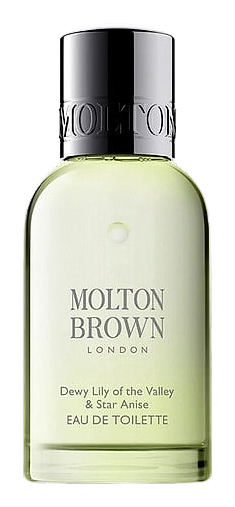
Dewy Lily of the Valley & Star Anise arrived in 2016, composed by Jennifer Jambon for Molton Brown. The pairing itself is the headline: one of perfumery's most delicate florals set against the sweet, sharp kick of star anise, two ingredients that rarely share the same bottle. The logic holds on skin. Lily of the valley carries a cool, green dewiness that star anise can cut through without overwhelming, and the result carries the crisp, rinsed quality of a garden in the first minutes after rain, before the warmth of the day settles back in. There's nothing heavy in the construction, no syrupy base dragging the florals down, just a clean tension between green softness and warm spice.
Star anise is the brave choice here. This one introduces a second voice alongside the floral, the sharp, almost boozy sweetness of anise, which does what few green florals attempt. It adds volume without weight. The magnolia and green mandarin in the opening extend that contrast into citrus, while white tea and peony in the heart keep the floral reading pure. The interplay is almost musical, a call and response between cool green and warm spice, each note aware of the other.
The evolution
The first 15 minutes belong to the anise and the green mandarin, and they announce themselves. Star anise opens with that sharp, sweet, almost black-liquorice heat, buoyed by bright citrus and a magnolia that softens the edges. It's the most assertive the fragrance will ever be. By the 30-minute mark, the anise pulls back, the magnolia steps forward, and the lilies begin to open. White tea adds a translucent, almost watery quality to the heart, the kind of sheer lift that keeps the composition from feeling dense. The heart holds for 2-3 hours: clean, green, and floral, with the anise still flickering underneath like a memory of something warmer. You catch it in waves, a green brightness one moment, a flicker of spice the next, then back again. The drydown is where the composition settles into its quieter self.
Cultural impact
Lily of the valley has long held a place in European perfumery, prized for its fleeting, green sweetness and its association with spring, renewal, and quiet luxury. It is a flower that perfumers have returned to again and again, a kind of shorthand for freshness, innocence, and the soft hush of a garden in early bloom. Star anise, by contrast, brings a different kind of history: the warmth of spiced apothecaries, the depth of liqueurs and old kitchen rituals, the kind of scent that feels both ancient and intimate.