
The Story
Why it exists.
The beginning
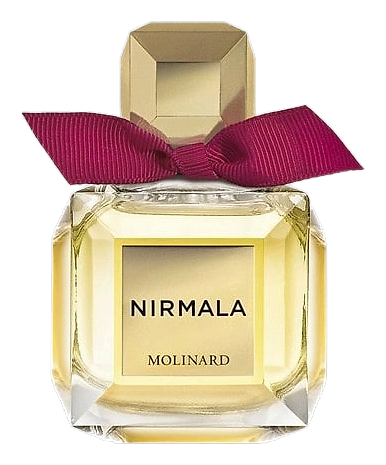
Nirmala arrived as Molinard's statement in an unexpected space, one the house approached with characteristic restraint before committing fully. The name suggests something luminous and otherworldly, and the composition follows: an Oriental Floral built on the collision of sun-ripe tropical fruit and warm, persistent vanilla. Where other houses might have hedged the sweetness, Molinard leaned into it, not as sugar, but as warmth with actual weight. The official copy calls it 'a meeting between a cozy universe and a disturbing wake of tenderness.' That tension, comfort and something sharper underneath, is the whole point. The tropical notes don't simply sit atop the composition; they integrate with the warm vanilla base in a way that creates an almost physical sensation of comfort.
The structure is deceptively simple: bright citrus-topped fruit, a tropical heart, a warm woody-vanilla base. What makes it work is the way the mango doesn't compete with the jasmine, they share space like two people who've learned to coexist. The real skill is in the drydown. Tonka bean doesn't just support the vanilla; it gives it somewhere to live. Blue Atlas cedar grounds what could be pure sweetness with something drier, almost resinous. The result is a fragrance that smells expensive without announcing it.
The evolution
It opens on a wave of tropical sweetness, passion fruit, mandarin, the tart edge of grapefruit cutting through. You get maybe 20 minutes of this before the mango arrives to soften everything. Not replace, soften. The jasmine doesn't fight the fruitiness; it braids into it. Then the base arrives, and this is where Nirmala earns its reputation. Vanilla isn't the dominant note by accident, it's the point. Tonka bean makes it creamy, cedar makes it last. The warmth develops and evolves over time, starting bright and gradually settling into something more intimate. As the top notes fade, the underlying warmth becomes more apparent, revealing the careful construction beneath the initial sweetness. The fragrance transforms rather than simply disappearing, leaving behind a subtle presence that speaks to the quality of its composition.
Cultural impact
Nirmala occupies a specific corner of the market: tropical-gourmand with enough warmth to wear year-round. The fragrance has found its audience among those who appreciate tropical sweetness without the usual pitfalls of such compositions. Comparisons to other fragrances in the genre are inevitable, but Nirmala holds its own through restraint and depth rather than sheer intensity. What distinguishes it is the way it manages to be both comforting and intriguing, sweet without being cloying, warm without becoming heavy. The tropical elements are balanced by underlying complexity that prevents the fragrance from feeling one-dimensional.