The Story
Why it exists.
The beginning
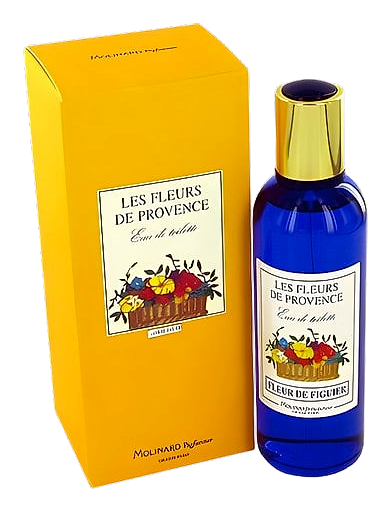
Fleur de Figuier arrived in 1999 as part of Molinard's Les Fleurs de Provence collection. The concept is straightforward: native plants, untranslated. No invented florals, no abstract musings. Just what actually grows in that particular ground, under that particular light. Fig leaf, Galbanum, Ivy, Petitgrain, and Cedar. Five notes. One tree. The whole thing distilled down to the stubbornness of a single plant, the generosity of a tree that drops leaves year-round and offers its green, milky, faintly peppery scent long before the fruit arrives. Molinard didn't need to complicate it. Fleur de Figuier treats the brief as permission to keep things minimal.
What's interesting here is what got left out. No rose, no jasmine, no white floral cushion to soften the edges. Fig Leaf, Galbanum, Ivy, Petitgrain, and Cedar. The green material leads, and it leads unapologetically. Galbanum is one of perfumery's most challenging raw materials, sharp, almost turpentine-like, capable of overwhelming a composition if not handled with care. Pairing it with Ivy, another green note with an almost vegetal bitterness, creates a tension that defines the entire wear.
The evolution
The first ten minutes are almost aggressive in their greenness. Galbanum cuts in sharp and resinous, like snapping a fig leaf and catching the milky sap before it dries. There's a bitterness here that some skin will amplify, others will soften, but it never disappears entirely. This is the phase that decides things. Either the green appeals to you or it doesn't. The fig leaf sweetens the picture by minute fifteen, introducing that distinctive milky, almost lactonic quality that defines the fig tree as a perfumery material. Petitgrain lifts the composition at the edges, adding a citrusy, slightly floral brightness that prevents the green from collapsing into something purely herbal. Around the two-hour mark, the heart settles into something quieter. The ivy integrates, the galbanum recedes, and what remains is a soft, warm, almost skin-like green.
Cultural impact
Fleur de Figuier occupies an unusual position: too green to sit comfortably in the mainstream floral category, too classic to register as niche. It's the kind of fragrance that finds its people quietly, the wearer who discovers it once and then wears it every summer for years. The 1999 release is genuinely ahead of much of what followed in the green category, and its restraint, the absence of sweetness, the refusal to add gourmand warmth, gives it a character that still feels distinct.