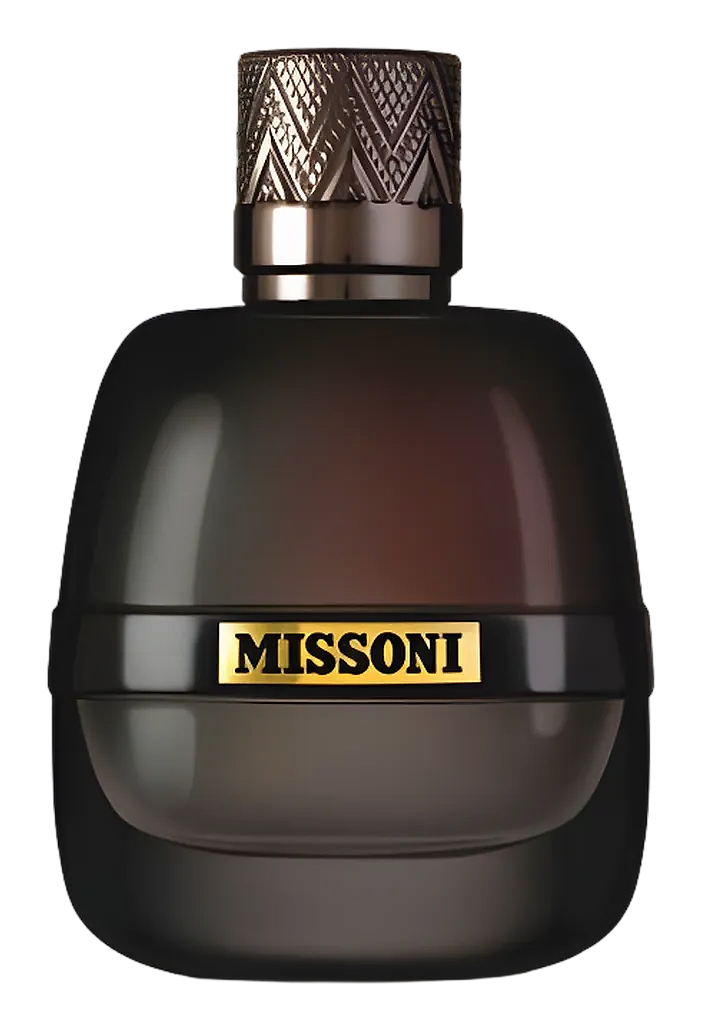

The Story
Why it exists.
The beginning
Nathalie Gracia-Cetto designed Missoni Parfum Pour Homme in 2017, working from the brand's own creative brief: translate the Mediterranean coast into scent. This was not a perfumer's interpretation of Italy. It was Italy itself, filtered through Missoni's geometric sensibility. The composition draws from the brand's visual language of bold color relationships and precise patterns, treating fragrance as another medium for their design philosophy rather than a commercial afterthought.
The note structure mirrors the Missoni aesthetic: bold, geometric, and confident. The opening references the bright coastal light through citrus and lavender. The heart represents the herbaceous hillsides through Pomarose and ginger. The drydown grounds everything in woody depth that recalls Mediterranean forests. Each phase builds on the previous one, creating a cohesive composition that functions like a visual pattern.
The evolution
The opening channels the bright, sharp light of the Mediterranean coast through lime and pink grapefruit, with lavender and lime leaf providing herbal grounding. As the composition evolves, the heart introduces a more complex botanical character. Pomarose takes center stage, a synthetic rose material that reads as both fruity and floral, while jasmine adds delicate sweetness and ginger contributes subtle warmth. The drydown brings the composition home with a woody-musky foundation: oak and birch for dry, smoky character, sandalwood for creaminess, patchouli and musk for depth and longevity. This arc from coastal brightness through herbal complexity to woody warmth mirrors the Mediterranean landscape itself.
Cultural impact
Missoni Parfum Pour Homme occupies a specific position in the designer fragrance landscape: elevated enough to feel special, approachable enough to wear daily. It bridges the gap between fresh and woody without committing fully to either camp. Community discussions often compare it to Bleu de Chanel, with reviewers finding some similarity in spirit despite different executions. The comparison isn't flattering or unflattering; it's simply where people's mental maps place it. Wearers appreciate that it manages to feel distinctive rather than derivative, finding its own territory between the mainstream and the avant-garde.