
The Story
Why it exists.
The beginning
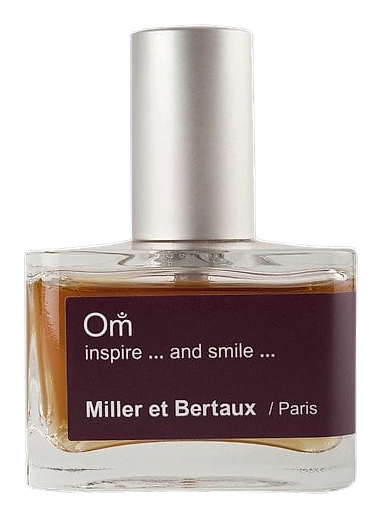
Om arrived in 2011 from Miller et Bertaux, the Parisian design house that treats fragrance as personal styling rather than a statement. The name itself is an invitation, a single syllable that carries centuries of meaning, a breath that completes itself. For Miller et Bertaux, whose collection spans clothing, art, and perfume from their Marais boutique, Om represents the intersection of global spirituality and intimate wearability. This isn't fragrance as performance. It's fragrance as practice.
What makes Om unusual is its restraint. Where many oriental fragrances announce themselves with volume, this one whispers, and the whisper has staying power. The combination of myrrh and clove in the opening creates an immediate warmth, a resinous sweetness that feels meditative rather than heavy. The pink pepper doesn't dominate; it punctuates, adding a quiet spark that keeps the composition from feeling static. And the patchouli, earthy, grounding, serves as a bridge between the warm opening and the long, incense-softened drydown. It's the kind of layering that rewards attention.
The evolution
The opening arrives with myrrh's sweet resin and clove's warm spice, settling onto skin almost immediately. Within minutes, pink pepper enters quietly, not sharp, just present. Patchouli lingers beneath, giving the heart its earthy anchor. The real arc begins as incense smoke rises, weaving through the patchouli before vanilla arrives to soften everything. By the final act, incense and vanilla dominate: warm, intimate, close. On most skin, this holds for 4-6 hours. Some find the vanilla lingers into the next day as a skin-warm whisper.
Cultural impact
Om occupies a specific corner of the niche fragrance world, the kind of scent that attracts people who've moved past performance fragrances into something quieter. It's worn by those who want warmth without announcement, sweetness without sugar, incense without smoke. The community describes it as meditative, intimate, and long-lasting on most skin types.