
The Story
Why it exists.
The beginning
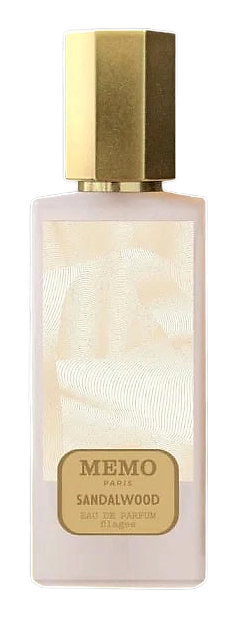
In 2026, Memo Paris added Sandalwood to its Essences Filages collection. The line offers a focused approach to fragrance composition, and Sandalwood represents one of its most stripped-back expressions. Where many sandalwood fragrances in the modern market build elaborate structures around the wood, layering it with florals, ambers, and resins to create complexity, this composition takes a different path. The wood is the point. Nothing else competes for attention. Australian sandalwood anchors the formula. The oil carries its own particular character, distinct from other sandalwood varieties, with a dryness that sets it apart from softer, sweeter expressions of the wood. There's a quiet austerity to it, a sense of raw material rather than finished product.
The wood at the center of this composition is Australian sandalwood, and the fragrance treats it with unusual respect. Rather than softening the material with accompanying accords or rounding it into something more conventionally wearable, the formula allows the oil to present itself in its own terms. The character that emerges is distinctly woody, drier than many sandalwood expressions, with a grainy quality that feels honest rather than polished. What makes Sandalwood from Memo Paris interesting is what it leaves out.
The evolution
Sandalwood by Memo Paris wears differently than most fragrances built around this material. The opening is remarkably calm, the wood arriving without fanfare or the bright volatile burst that typically characterizes the first moments of a scent. There's no citrus sparkle, no herbal lift, no aromatic introduction. Just the wood, already settled, as though the fragrance skipped the overture entirely and went straight to the main theme. As the wear develops, the sandalwood's character unfolds gradually. The initial impression gives way to something warmer and more rounded, though never heavy. The wood seems to soften slightly with body heat, releasing a creaminess that feels intrinsic to the material itself rather than added through supporting notes.
Cultural impact
Sandalwood occupies a significant place in the world of fragrance, a material with deep historical resonance that has shaped how we understand woody compositions. For generations, certain varieties of sandalwood were prized above almost all other perfume materials, their rich, creamy character forming the backbone of classical formulations. When traditional supplies became constrained, the fragrance industry faced a reckoning, forced to reconsider how this essential ingredient would be sourced and used going forward. The response involved significant shifts in cultivation and trade.