The Story
Why it exists.
The beginning
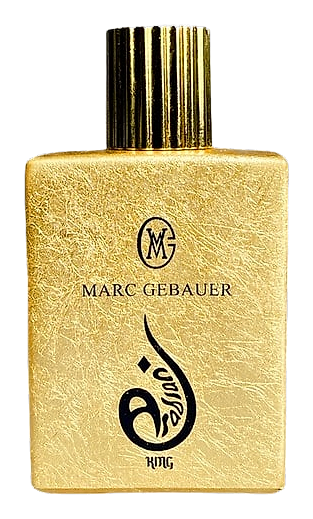
Arabian King arrived in 2022, a few releases into Marc Gebauer's experiment with narrative scent. The brief was simple on paper: translate the richness of Middle Eastern spice traditions through German precision. In practice, that meant finding the tension between opulence and restraint, building a fragrance that could feel lavish without losing its composure. Chris Maurice was the perfumer tasked with that balance. His approach rejected the idea that Arabian-inspired compositions needed to announce themselves from across a room. Instead, he threaded oud through the structure from the very start, not buried in the base where it could ambush the wearer hours later, but woven into the opening alongside the citrus. The rose came next, a moderating force, keeping the richness from tipping into heaviness. The name carries its own intent. Arabian King doesn't hint or suggest.
What makes Arabian King's structure unusual is the timing of the oud. In many oriental compositions, oud arrives late, a dramatic reveal in the drydown meant to justify the price of admission. Here, Chris Maurice places it at the opening alongside bergamot and grapefruit, where its warmth immediately moderates the citrus brightness. The effect is less revelation than integration: oud as a foundational material rather than a spectacle. The rose performs a similar function in the heart. Rather than arriving as a flourish, the way rose often functions in oud-heavy compositions, it's introduced as a counterweight to the cedar that anchors it.
The evolution
The opening hits fast. Bergamot and grapefruit arrive together, cutting bright and slightly tart against the skin. The saffron threads in within minutes, adding a warm, almost medicinal undertone that prevents the citrus from reading as merely fresh. And the oud, this is where the evolution announces itself differently from most orientals, the oud doesn't wait. It arrives alongside the citrus, present from the start but held in check, integrated rather than announced. The heart phase belongs to the rose, but it's not a soft landing. The geranium brings a green, slightly bitter edge that keeps the rose honest. Cedar underneath provides structure, a woody framework that prevents the whole composition from floating upward. For the first two to three hours, the sillage reads as substantial, the kind of presence that registers when you move through a space rather than when you stand still. The drydown is where Arabian King earns its reputation. Musk and amber build slowly, replacing the initial brightness with something warmer, closer to the skin.
Cultural impact
Arabian King positions itself within a specific lineage: oud-forward orientals that reject the idea of subtlety as a virtue. The performance metrics, longevity and sillage both scoring near the ceiling, speak to a fragrance designed for impact. Wearers gravitate toward it when they want something that announces without apology, that reads as bold rather than polite. In the broader landscape of mid-market orientals, it occupies a space that many houses avoid: overtly luxurious, unafraid of presence, built to last an entire day rather than fade into background noise.