
The Story
Why it exists.
The beginning
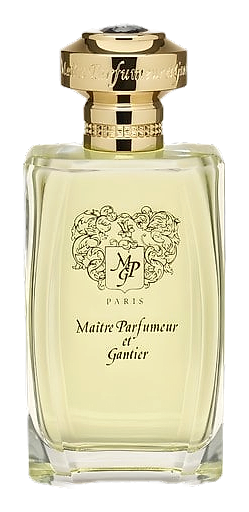
Jean Laporte designed Racine in 1988, the same year he founded Maître Parfumeur et Gantier. The name means root, and that's exactly what this fragrance does. No grand gestures. No top-note theater. Instead: citrus that doesn't dominate, vetiver that doesn't quit, and an oakmoss presence that speaks to a time when masculine fragrance meant something deeper than projection. It's the inaugural scent of a house built on the idea that refinement lives in restraint, not announcement.
Six notes. That's the entire pyramid, three in the top, three in the base, nothing in between except transition. It's a deceptive simplicity. Blackcurrant bud brings a green, slightly bitter edge that keeps the citrus honest. Lavender doesn't go soapy here; it stays herbal, slightly wild. Vetiver anchors everything, pushing the composition toward earth, toward root, toward something mineral and dry rather than sweet. And then there's the oakmoss, the part that makes Racine genuinely rare. Damp, forest-floor, almost mushroomy in its depth. That's the chypre character, the thing that modern reformulations simply cannot replicate.
The evolution
The opening is citrus sharp: lemon and bergamot, clean and immediate. Blackcurrant bud adds a subtle green counterpoint that keeps it from being generic. For the first thirty minutes, this is bright and direct. Then the hand-off begins. Lavender emerges, softening the citrus. Vetiver takes over, earthy, rooty, slightly smoky. The jasmine in the heart adds a quiet floral undertone that most wearers won't consciously register, but will notice as a warmth beneath the green. By the third hour, the oakmoss arrives. This is what collectors seek: the damp, forest-floor character that IFRA restrictions have made nearly impossible to find in modern perfumery. It lingers. Sandalwood adds creaminess to the base, smoothing the edges. The drydown holds for hours, close to the skin, intimate, the kind of presence that doesn't announce itself but stays.
Cultural impact
Racine represents something increasingly rare: a 1988 masculine composition with full oakmoss presence. The same IFRA restrictions that affected many classic fragrances post-2000s mean this scent carries a chypre depth that simply cannot be replicated in reformulated versions. Collectors seek it precisely for that reason, a window into what classical masculine perfumery once offered.