The Story
Why it exists.
The beginning
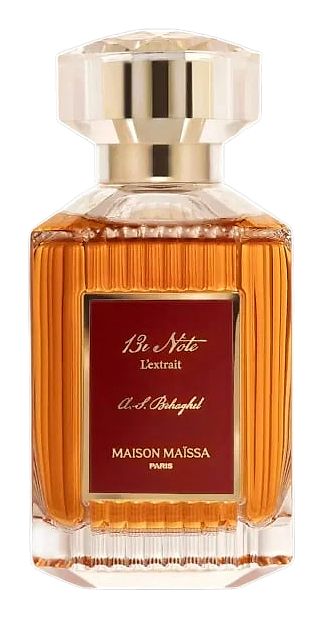
13e Note joins Maïssa's Edition des Œuvres, a collection built for numbered, limited expressions. Released in 2025 with only 1,000 pieces made, the fragrance was composed by Anne-Sophie Behaghel. The composition sets cool metallic clarity against the lush weight of Indian tuberose absolute, a tension that defines the whole piece. Behaghel built the structure as a study in contrasts: something that feels industrial at first touch, then unmistakably alive once it warms against skin. The metallic top notes crackle with a cold, almost mineral brightness, the kind of opening that reads more like struck steel than soft mist. As that chill begins to soften, the tuberose surfaces slowly, not rushing in but arriving with its full, buttery density intact.
Indian tuberose absolute is one of perfumery's most demanding materials, dense, waxy, and almost narcotic in concentration. Pairing it with metallic notes is a deliberate provocation, forcing the floral to push through a cold, mineral haze before it can fully bloom. Iris adds the powdery, rooty architecture that keeps the sweetness from collapsing into something simply pretty. The result is a fragrance that asks you to wait for it, to let the temperature shift before deciding what you think.
The evolution
The first ten minutes feel almost clinical. Bergamot lifts the metallic notes into something sharp and bright, like polished steel catching morning light. There's nothing soft about this opening. Then the bergamot retreats and the metallic quality stops feeling industrial and starts feeling like skin, your own skin, just slightly charged. The Indian tuberose arrives next, dense and creamy, carrying iris in its wake. That heart phase runs warm and enveloping for two to three hours, the floral weight unmistakable but never syrupy. As the composition moves into its final third, cedarwood and patchouli ground the blend while honey thickens the sweetness and civet adds that unmistakable animal warmth, the kind that makes a fragrance smell lived-in rather than applied. The drydown clings to fabric and skin for the better part of a day. On a sweater the next morning, you'll still catch honey, a thread of tuberose, and that warm, slightly dirty civet signature.
Cultural impact
Part of Maïssa's Edition des Œuvres, 13e Note was limited to 1,000 numbered pieces, a deliberate scarcity that makes each bottle a counted object rather than an open-ended product. The metallic-floral pairing is what gives the fragrance its unusual opening: cool, almost mineral clarity stacked against the dense, creamy sweetness of Indian tuberose absolute. That contrast is what makes 13e Note demand attention at first spray, before the warmer floral core has a chance to settle in.