
The Story
Why it exists.
The beginning
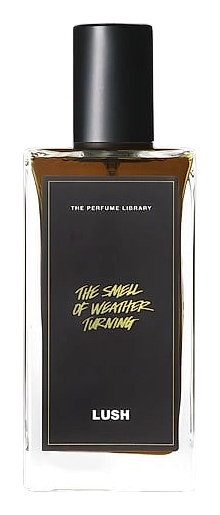
Simon Constantine built The Smell of Weather Turning from an idea that sounds more like a feeling than a fragrance concept: what does a shifting sky actually smell like? The answer arrived as a crisp hit of English peppermint, that sharp, almost electric cold that comes before lightning decides where to strike. Around that opening, he layered the aftermath: oakwood going smoky, hay drying in damp air, the green honesty of nettle and chamomile grounding the whole thing in something that feels less like perfume and more like a specific Tuesday afternoon in late summer when the clouds turned but never quite opened. Lush gave him the space to make it. He used it.
What's unusual here isn't a single ingredient, it's the architecture. Most fragrances build upward: bright opening, full heart, settled base. The Smell of Weather Turning builds downward. That peppermint doesn't fade so much as sink, pulling the rest of the composition with it into something warmer, earthier, more grounded. The mint stays present throughout, but it changes character, from cold to cooling to a memory of cold. Oakmoss and beeswax hold the drydown like wet grass holds the sun's warmth after a storm. That continuity is what makes it feel like weather, not just smell like one.
The evolution
The opening is confrontational in the best way. Peppermint spikes bright and sharp, some people scrub it off in the first thirty seconds, which is a mistake, because what comes next is the whole point. Within twenty minutes, the mint softens into something herbaceous, almost cooling rather than cold. The hay arrives quietly, sliding under the mint like a ground floor underneath a penthouse. Oakwood emerges slowly, smoky and patient. By the second hour, the composition has settled into something dense and warm: beeswax, nettle, the earthier parts of oakmoss doing their work. It doesn't project as much as it lingers, close to the skin but impossible to ignore once you're used to it. Eight to ten hours later, on fabric especially, you catch traces of something sweet-smoky that you almost forgot you were wearing. The storm passed. The air stayed.
Cultural impact
The Smell of Weather Turning sits in a specific corner of the fragrance world, the one where green, herbal, and slightly medicinal overlap. It doesn't try to please everyone, and that honesty is what makes it stick. Wearers describe it as the scent of someone who walks into a room and doesn't need to announce themselves. It's polarizing in the way good art often is: some find the opening harsh, others find it exhilarating. The ones who stay tend to stay longest.
The House
LushLush is a British cosmetics company founded in Poole, England, in 1994 by trichologist Mark Constantine, his wife Mo Constantine, and five additional co-founders. The brand gained international recognition for its hand-pressed bath bombs, which Mo Constantine invented in her garden shed in 1989. Now operating in 49 countries, Lush has evolved from a single High Street shop into a global retailer while maintaining its commitment to ethical manufacturing and cruelty-free products. In-house perfumers Mark Constantine OBE, Emma Vincent, and Alina Gliwinska create the brand's fine fragrances, which are presented through the Perfume Library concept stores in Liverpool, Florence, and London. The fragrance collection spans over 230 perfumes dating back to 1989, organized into thematic volumes that serve as milestones in the brand's perfumery history.
The Creator
Simon ConstantineSimon favors single‑note focus, often building a composition around a pure absolute or essential oil. He pairs a dominant material with subtle supporting accents, allowing the star ingredient to breathe.