The Story
Why it exists.
The beginning
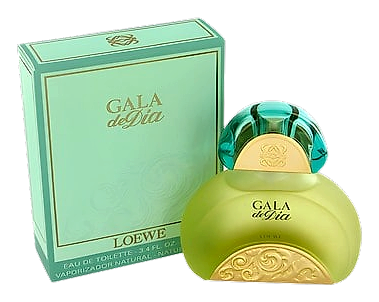
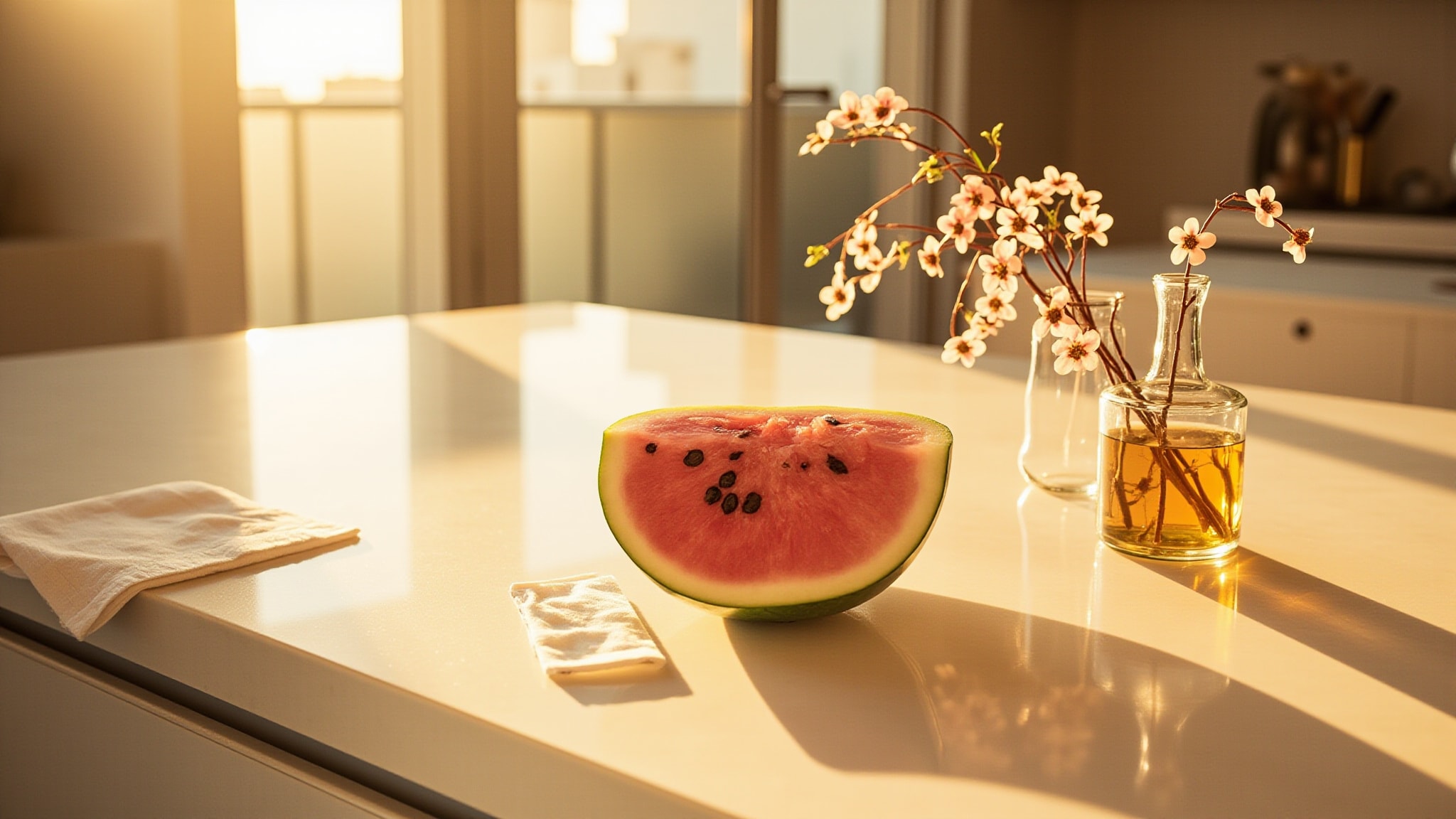
Gala de Día arrived in 1996 as a daytime fragrance, a woman who makes an entrance without needing permission. The name says it all: this is glamour worn in daylight, not saved for the evening. It carries the confidence to be bright without being fleeting, fresh without being forgettable. The composition unfolds across the hours between morning and dusk, when sunlight hits Spanish plazas and everything smells like flowers and warm stone. Opening with a crisp, aqueous burst of watermelon that feels like biting into a perfectly ripe slice on a sun-drenched terrace, the fragrance quickly layers in soft floral nuances that give it body without heaviness.
What makes the composition work is the way the watermelon refuses to disappear. In most fragrances, a top-note fruit recedes within minutes, leaving the florals to carry the heart in peace. Here, it persists, that synthetic-fruity quality lingering beneath the lilac and peony, threading through the heart and keeping the florals honest. It's what separates Gala de Día from the pack of lilac-and-rose fragrances that came before and after it. The black locust note, often described as similar to orange blossom but with a honeyed edge, adds body without sweetness, a green floral undertone that anchors the brighter top notes.
The evolution
The opening hits immediately: mandarin orange and watermelon, bright and almost artificially juicy, that synthetic sweetness reading as freshness rather than candy. It's cool, crisp, the olfactory equivalent of morning light on white tile. Within minutes, the florals arrive. Lilac leads, dense and green. Peony follows, softer and rounder. Mandarin orange retreats but doesn't vanish, it keeps the florals from going heavy. Black locust adds a honeyed depth underneath, and the watermelon lingers in the background, synthetic-sweet, refusing to fully dissolve. The heart is warm and saturated, a full floral arrangement on a warm afternoon. The drydown is where Gala de Día earns its sandalwood. As the lilac fades, sandalwood and cedar take over, woody and slightly creamy. Peach and carnation add a spiced warmth, carnation's peppery edge catching against the coriander. The watermelon is still there, a ghostly sweetness beneath the woods. On fabric, the floral note holds longest. On skin, the woods arrive faster.
Cultural impact
Gala de Día arrived in 1996 with a synthetic-fruity brightness that felt notably bold for that era. The watermelon accord gave the fragrance an aqueous, translucent quality that set it apart from more conventional releases of the period. Rather than relying on predictable citrus bursts or heavy floral hearts, the composition threaded fruit-forward modernism into a structure that still felt grounded and wearable. This approach placed the fragrance in conversation with emerging ideas about what luxury scent could be, pushing against the conventions of mainstream perfumery without abandoning elegance.