
The Story
Why it exists.
The beginning
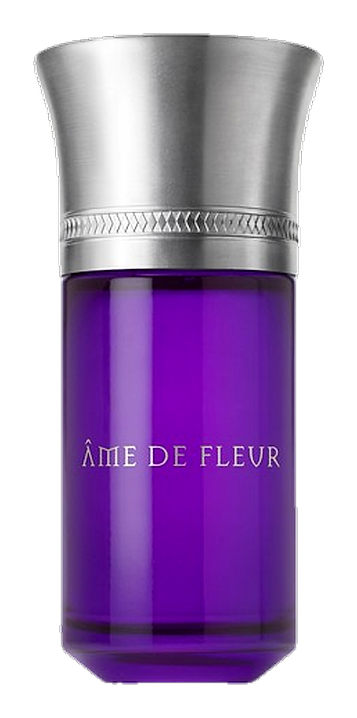
Âme de Fleur draws its inspiration from the anemone, a flower deeply linked to the mythology of Aphrodite and Adonis. The bloom has always carried an inherent tension, beauty so brief it aches, desire so intense it transforms. Les Liquides Imaginaires took that symbolic weight and asked their perfumer to bottle it. Not as a nostalgic exercise, but as a living reminder of what flowers can mean when they're allowed to be more than pretty. The house operates this way: every fragrance starts as a story, and the story finds its materials after. For Âme de Fleur, the materials chose the wearer as much as the other way around. The resulting scent captures that fleeting quality, opening with bright, almost translucent florals that feel both delicate and surprisingly bold.
What makes this composition unusual is the way it refuses to separate the beautiful from the animalic. Heliotrope and green pear open clean, almost soapy, a fresh sheet, a morning window. But the heart doesn't follow. Tuberose and jasmine sambac absolute push hard, the kind of white floral intensity that borders on confrontational. The saffron doesn't soften this. It sharpens it, adds warmth that reads almost as spice. This is the fragrance's honest argument: you can't have the anemone's delicacy without its myth. The woody base (cashmere wood, ambroxan, Clearwood) doesn't rescue the florals, it frames them, holds them in place so the wearer can live inside them for hours.
The evolution
The first twenty minutes are the green pear and heliotrope stage, bright, clean, a little powdery. It smells like the memory of a room where something beautiful just happened. Then the tuberose takes over, and the character shifts entirely. The jasmine sambac doesn't trail behind; it piles on, doubling down on the floral density until the skin feels warm with it. The saffron reads as a low hum of warmth, never sharp enough to distract. Around the third hour, the base materials arrive: ambroxan and cashmere wood settling into the florals like a deep exhale. The drydown is where Âme de Fleur earns its mythology. This is the anemone as it was always meant to smell, not fresh and brief, but lasting and layered, the kind of scent that stays close to the skin through a full workday and announces itself again on the second day.
Cultural impact
Âme de Fleur carries the weight of its mythic inspiration, not as a simple white floral, but as a fragrance that asks the wearer to inhabit something larger than itself. The anemone linkage grounds it in a specific cultural register, giving the scent narrative depth beyond the conventional floral category. Its tuberose character is substantial, presenting white florals in their most assertive and unapologetic form. A woody base grounds the composition, lending structure that prevents any tendency toward softness. The reception among those who've found it skews toward strong opinions; this is not a fragrance that leaves people indifferent.