The Story
Why it exists.
The beginning
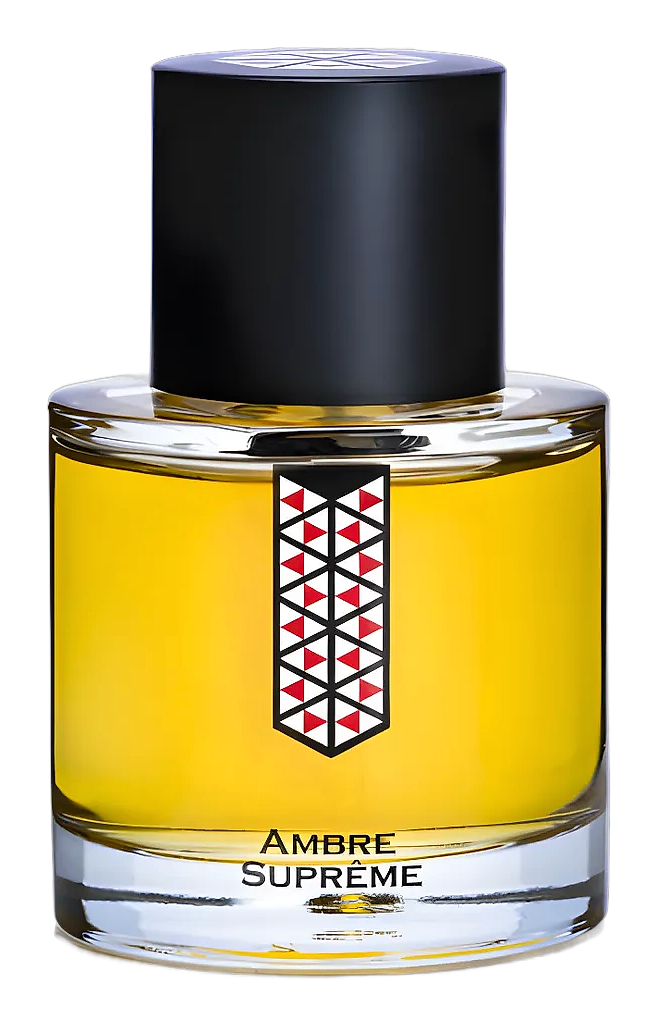
Antoine Lie has never been a perfumer content to play it safe. His work across independent and luxury houses consistently reaches for compositions that divide rooms, not because he courts controversy, but because the materials themselves demand honesty. For Ambre Suprême, he found himself drawn to a central tension: amber in fragrance has become shorthand for warmth and sweetness, a comfortable accord worn soft by overuse. The brief was to make an amber that didn't apologize for what it actually is, raw, mineral, animalic, the crystallized scent memory of a coastline in heat. In this composition, Lie built around ambergris as a structural center. Not as a base, but as a framework that surrounds the heart, so that everything else bends and responds to its presence.
Aldehydes and ambergris are old collaborators, think of how Chanel No.5 built an entire aldehydic signature, or how older masculine compositions used ambergris as a fixative that also addedlift. But Lie doesn't reconstruct a vintage template. He uses the aldehydic brightness to illuminate the ambergris from above, letting clary sage and cardamom bring green-herbal tension to the opening, while pink pepper adds a fine, crystalline heat that keeps the surface from settling into sweetness. What makes the composition distinctive is the refusal to sweeten. Most amber fragrances lean into tonka, vanilla, benzoin, materials that soften and round.
The evolution
The opening announces itself. Aldehydes and cardamom arrive in a dense, almost bracing wave, with cardamom's camphoraceous green edge cutting through the brightness. The aldehydic quality reads as sharp to some noses, almost medicinal, shimmering and radiant to others. This phase is volatile, a fragrance that doesn't coax you into liking it, but announces itself decisively. Then something shifts. Jasmine absolute and neroli rise from beneath the spice and aldehyde, bringing a translucent floral warmth that softens the edges without neutralizing them. Neroli's citrus-herbal quality keeps the heart from becoming too sweet; jasmine adds depth and the faintest indolic kick that bridges toward the base. Patchouli arrives quietly, its dark earthen quality settling the composition downward without dragging it into heaviness. The drydown is what brings people back.
Cultural impact
Ambre Suprême has divided its wearers with unusual consistency. The aldehydic opening reads sharp to some, almost metallic in its first minutes, an uncompromising introduction that filters for a specific taste. Others find exactly that quality magnetic, a fragrance that doesn't coax you into liking it. The ambergris drydown is what creates the devoted following. Not because it is sweet, it isn't, but because it smells like something real, something animal and mineral and honest in a category that has leaned hard into synthetic recreations of amber that smell like nothing organic.