The Story
Why it exists.
The beginning
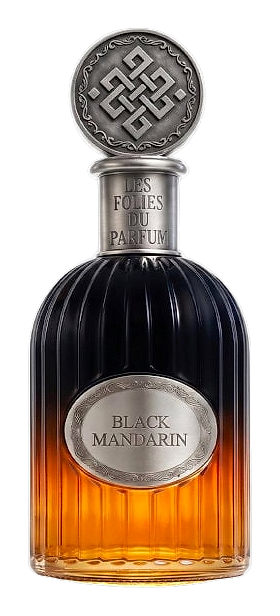
Black Mandarin arrived in 2026 from Les Folies Du Parfum. Bertrand Duchaufour is the perfumer behind the composition, a name that carries weight across enough genres to make any single release feel like a deliberate narrowing of focus. The brief here seems clear: take a single fruit, the mandarin, and let it swing between two extremes, candied and corrupt, sweet and shadowed. What emerges is a fragrance that dresses for the opera but isn't afraid to get a little dirty along the way. The opening announces both sides of that equation at once, a bright candied citrus note that reads almost like sugared peel laid over something heavier, smokier, with a faint metallic flicker underneath that comes from saffron rather than any actual metal.
The construction is a study in controlled contradiction. Candied mandarin orange and black mandarin occupy the same composition but live in different centuries: one glistening with sugar, the other smoldering toward something darker. Rose and saffron thread the opening together, lending the fruit a metallic shimmer that keeps the sweetness from collapsing into jam. Then cashmere wood and myrrh take over, introducing a resinous gravity that most fruity fragrances never touch. The base locks it all in place with oud, benzoin, and suede, three materials that refuse to play background.
The evolution
On skin, Black Mandarin opens with a flourish. The candied mandarin arrives sweet, almost confection-like, but the saffron is already working underneath, introducing a dry, leathery heat that keeps the sugar honest. Rose shows up early, not as a bouquet but as a thread, lending the opening a metallic edge that reads more like foil wrapper than flower. The black mandarin in the heart phase is where the composition earns its name, a deep, resinous citrus that smells less like a snack and more like something aged and darkened by time. Cashmere wood wraps around it, soft but dense, and myrrh adds the dusty, ancient-library quality that makes this feel less like a perfume and more like a found object.
Cultural impact
Black Mandarin earns attention because it treats a familiar material, the mandarin, as something capable of carrying a full composition rather than serving as a bright opener for something else. Most citrus-led fragrances use the fruit to introduce a fragrance and then move on, leaving the real business to florals, woods, or ambers in the base. This one keeps the mandarin present through every phase, reshaping it as it goes, candied at first, then darkened by myrrh and saffron, then finally reduced to a faint sweetness under layers of oud and suede.