
The Story
Why it exists.
The beginning
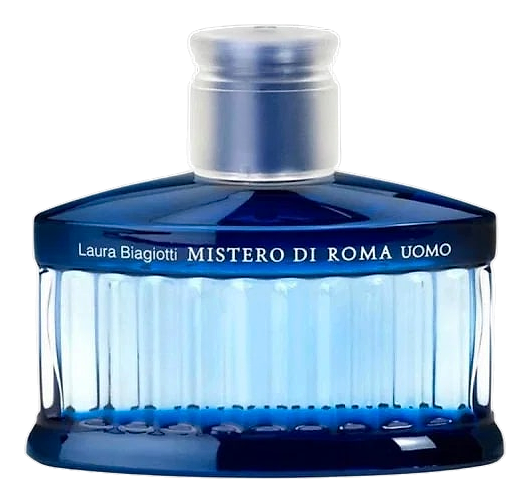
Mistero di Roma Uomo extends the narrative Laura Biagiotti built around Rome, not the Colosseum postcard, but the city's interior courtyards, its afternoon light, its talent for making grandeur feel effortless. The 2010 release arrived when the fashion house had spent decades proving that Italian style wasn't about volume. It was about proportion. The fragrance follows that logic: no showmanship, no loud entrances. Just a composition that trusts the wearer to carry it.
What makes the structure interesting is the juniper. In most masculine compositions it stays buried in the heart, a supporting player in gin accord. Here it pushes forward, almost medicinal, almost cold. It doesn't complement the citrus so much as argue with it. That tension, sweet against dry, fresh against austere, is what keeps the scent from reading as generic. The heliotrope adds a soft powderiness that could tip into vintage territory, but the woody base anchors it. Sandalwood, patchouli, cedar: the classical masculine drydown, executed without apology.
The evolution
The opening hits bright, bergamot, grapefruit, mandarin, a quick flash of citrus that reads sunny and uncomplicated. Thirty minutes in, the juniper arrives and everything shifts. The sweetness pulls back. The composition gets cooler, greener, almost austere. Heliotrope and musk move into the foreground, keeping the sillage moderate and close. By hour two, the citrus is gone and the woody base takes over: sandalwood and cedar warmed by amber, patchouli giving it weight without darkness. The drydown stays intimate, 4 to 6 hours of warm skin, close presence, the kind of scent someone notices only when they're already standing next to you.
Cultural impact
Mistero di Roma Uomo occupies a specific space in the Italian masculine landscape: not the powerhouse declaration of the house's 1992 Roma, but something quieter, more considered. The sweet-fresh character with its juniper edge places it among the more interesting mainstream masculine releases of its era. Wearers who connect with it tend to describe it as the scent of someone who doesn't need to be noticed, which, in a market that rewards projection, is its own kind of statement.