
The Story
Why it exists.
The beginning
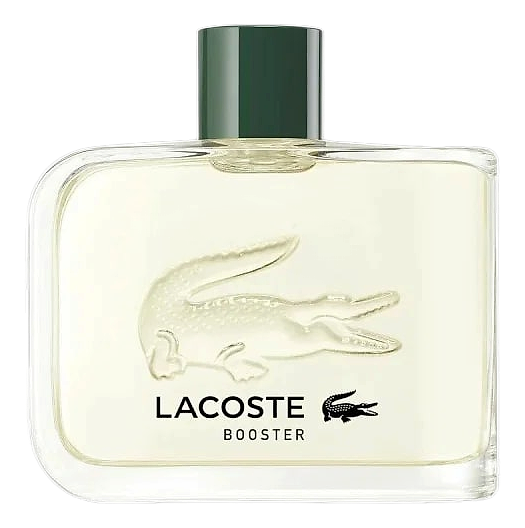
Lacoste needed a fragrance that matched what René Lacoste built: clothing that moved with you, never against you. Booster, created by perfumer Jean Kerléo in 1996, answered that call. Kerléo had already shaped the house's olfactory identity, he understood that Lacoste men don't perform confidence, they simply carry it. The brief was sporty refinement: something that could live on a morning commute and hold up through a long day, without ever smelling like effort. Booster landed in a era when men's fragrance was still figuring out what 'fresh' actually meant beyond barbershop tropes. It carved a different path, mentholated, herbal, grounded in cedar rather than soap.
What makes Booster interesting is the way it layers mint and eucalyptus as top notes rather than treating them as supporting players. Most fragrances use mint sparingly, a whisper of cool in an otherwise warm composition. Here, it's the opening statement, the menthol is nearly medicinal in its clarity, the eucalyptus adds that camphorated edge that feels like deep breaths in a locker room. The heart then shifts the register entirely: lavender softens the coolness, basil and galbanum add herbal greenness, and chili brings a faint prickle of heat that keeps the whole thing from feeling too sterile. It's a fragrance that actually uses its middle passage to transition, from cold to warm, bright to grounded.
The evolution
The opening is a full-frontal assault of cool. Mint, eucalyptus, a brief burst of grapefruit, this is the blast of a sports bottle, the inhale after a sprint. The menthol reads almost aggressive for the first five minutes, especially if you overspray. Then, gradually, the lavender begins to soften the edges. The eucalyptus doesn't disappear, it retreats, settling into the background like steam rising from skin after a hard effort. The heart notes arrive quietly: basil first, then galbanum, that sharp green note that gives the composition its backbone. The chili is subtle, more warmth than heat, threading through without announcing itself. By the second hour, the cedar takes over. This is where Booster earns its longevity, the base holds, warm and woody, vetiver adding earthiness beneath the sandalwood's cream. Six to eight hours is realistic on most skin. The sillage stays moderate throughout; this is never a fragrance that fills a room. The final drydown, hours later, is skin-close and slightly sweet, vetiver and cedar lingering like the memory of a good sweat.
Cultural impact
Booster arrived in 1996, a moment when men's fragrance was still negotiating the boundaries between fougère tradition and something newer. It carved a space for sport-adjacent masculinity, not the aggressive aquatic trend that dominated the late 90s, but something with actual herbal structure. The mentholated opening was distinctive enough to stand out, but the woody base kept it grounded in a classic masculine register. It's been in continuous production since launch, which says something about how well it fills its niche. Wearers tend to return to it, not as a signature, but as a reliable fallback when you want something present without demanding attention.