The Story
Why it exists.
The beginning
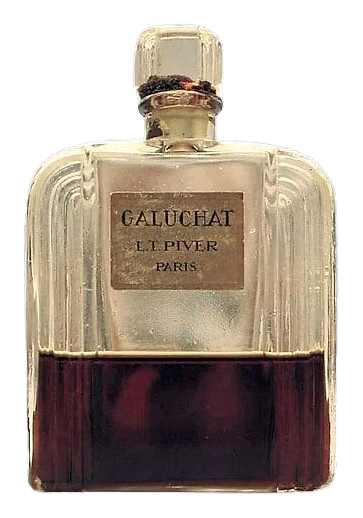
Galuchat takes its name from a specific material: shagreen, the polished sharkskin once used for fine objects across Europe. By 1927 the texture had become shorthand for luxury with an edge, the kind of surface that looked both refined and slightly dangerous. The name references that exact quality, that sense of a material meant to be touched and noticed. The bottle itself, tall and stepped in glass with a faceted stopper, appeared in a 1929 advertisement for the fragrance, an object meant to sit on a vanity and be noticed. Production eventually ceased, which is how most Galuchat bottles end up in the hands of collectors who know what they're holding.
What's interesting about this composition is the choice to call it leather without leaning on the usual scaffolding. The shagreen reference matters because shagreen isn't smooth. It's textured, almost abrasive, meant to be touched. The fragrance carries that same quality. There's friction in the wear. The accord reads as suede laced with a burnt plastic edge, a saffron-like rubberiness that refuses to dissolve into anything pretty, and underneath it all a musty, bitter vegetal quality that keeps pulling the composition back toward something raw.
The evolution
The first hour is the strangest. A spicy mint sits on top, sharp and almost mentholated, then a saffron-like rubbery warmth starts pulling through it. It's an odd opening, not immediately flattering, the kind of scent that makes you lean in rather than settle back. Around the second hour the composition settles into its leather heart, with suede and a thread of burnt plastic running through the middle. That burnt quality reads as scorched rather than smoky, closer to overheated material than to wood fire. It's a synthetic edge, slightly chemical, and it keeps the leather from reading soft or polished. By hour four the composition has shed its opening sharpness and settled into a quieter place. The drydown is a soft chypre ash, a musty bitter vegetal quality that sits close to the skin and refuses to sweeten itself.
Cultural impact
Galuchat sits within vintage fragrance collecting as a piece that rewards attention. The shagreen name and the ashy chypre close have made it a reference point for collectors interested in older French compositions that lean toward something less decorative. The fragrance reads as a leather with real grain to it, suede laced with a burnt plastic edge and a saffron-like rubberiness, all of it held together by a chypre ash that gives the whole structure its architectural quality. That combination of textures is unusual enough to make the surviving bottles worth pursuing. Within the L.T.