
The Story
Why it exists.
The beginning
Quentin Bisch grew up pulling beetroots from the soil, fascinated by their deep purple color and that strange, sweet, earthy smell, something most people never really notice. The beetroot note opens with a vivid, almost tactile quality, like holding a freshly pulled root still damp with soil. There's a natural sweetness that balances the mineral earthiness, and a faint metallic thread that gives the scent its characteristic edge. As the fragrance develops, the beetroot deepens, revealing layers of damp earth and sun-warmed skin. The overall effect is unmistakably botanical, a vegetable-forward composition that captures something most fragrance houses wouldn't dare attempt.
Beetroot is not a mainstream perfumery ingredient. The beetroot note here isn't an abstraction or a metaphor. It's the real thing, rendered with precision. When you first spray it, there's an immediate hit of that earthy mineral quality, sweet and rooty, like cutting into a fresh beet on a kitchen counter. The note has presence without being heavy-handed, and it lingers in the heart of the fragrance rather than vanishing quickly. In the drydown, traces of the beetroot remain, softened by the surrounding notes, giving the composition continuity and depth.
The evolution
The opening is bright. Bergamot and pink pepper give it some energy before the beetroot arrives, and when it does, it's immediate. Earthy, slightly sweet, the exact smell of soil on something pulled from the ground. It reads as photorealistic. Some people love this from the first spray. Others need a minute. Within the first hour, the citrus softens and the beetroot deepens. The mineral quality comes forward, that slightly metallic, mineral edge that makes beets interesting. Pink pepper lingers as a whisper of spice. The musk builds underneath, warm and clean, providing a counterpoint to the earthiness. By the second hour, the beetroot begins to recede. What replaces it is ambrette and ambergris, animalic warmth that feels less raw than skatole, more like skin warmed by movement. The vetiver grounds everything with a woody, slightly green edge. The drydown is where it becomes quiet. The beetroot is mostly gone. What remains is clean musk and soft vetiver, the kind of close skin scent you'd find in a quiet apartment at the end of a long day. Intimate. Restrained.
Cultural impact
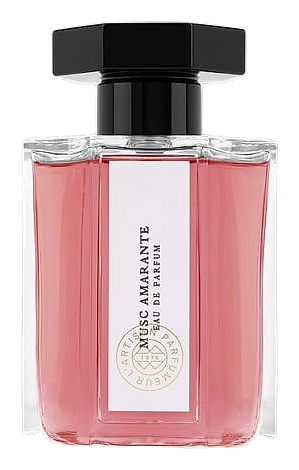
Musc Amarante sits in the Le Potager collection alongside other vegetable-forward compositions. The beetroot note in this particular fragrance has a quality that divides opinion, though that's not necessarily the intent. Some people find it startlingly accurate, like the real vegetable captured in olfactory form. Others find it earthier than they expected, more mineral than sweet. The fragrance invites wearers to engage with an ingredient they probably never considered for personal scent. It works particularly well in cooler weather when the earthy depth can unfold gradually without competing with environmental odors.