
The Story
Why it exists.
The beginning
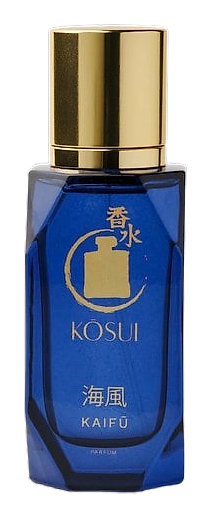
Kaifū translates to sea breeze, and that single concept does the heavy lifting for the entire composition. Yusuke Masuda built the fragrance around the feeling of wind moving past sun-warm stone near the coast, the moment when you catch salt on your lips before the weather shifts. Kōsui released it in 2026 as part of its three-fragrance debut, alongside Sabaku and Tasogare. The presentation keeps things quiet, the kind that sits heavy enough to notice but reserved enough to leave open on a dresser without shouting for attention. There is no marketing mythology stitched to a place on a map. The coast here is a suggestion, a pressure shift, a body of air moving in one direction. What you actually find on skin is a composition that treats the aquatic theme as atmosphere rather than spectacle.
What makes the structure interesting is the restraint in the heart. Watermelon and reed are an unusual pairing, both carrying green, watery, faintly mineral readings that can flatten a composition if used carelessly. Here they function as a hinge, handing the brightness of the opening bergamot and lavender into the drier cedar backbone without a visible seam. The accord profile stays firmly in woody aquatic territory without leaning on the synthetic calone-heavy formulas that have made the category feel tired. Sandalwood and patchouli underneath lend body, while amber adds the faintest warm haze at the floor. It smells like a place where air temperature and water temperature have briefly agreed on something.
The evolution
The first 15 minutes belong to the bergamot, sharp and citrus-bright, with lavender threading underneath like a ribbon you only catch when you move your wrist. Apple enters within minutes, slightly green, just sweet enough to keep the cold from feeling clinical. Around the 30-minute mark the watermelon arrives, quieter than expected, almost suggested rather than stated. Reed appears next to it, and the composition tilts away from cologne territory into something botanical, like stems crushed underfoot on a garden path after rain. Cedar takes over the middle third of the wear. Not loud. Not soapy. Just present in the way good timber smells when you run your hand across it. By hour three the base has settled into skin. Sandalwood goes creamy. Patchouli grounds it, dry and slightly earthy, offering a darker counterweight to the airy opening.
Cultural impact
Kaifū sits at the cooler end of Kōsui's 2026 debut lineup, balancing the other two compositions in the trio. Community reception has trended toward spring and summer wear, with wearers registering it heavily in warm-weather contexts. The fragrance positions itself less as a statement and more as a mood, the kind of scent that works best on a wearer who hasn't explained what it is. Where many aquatic fragrances announce themselves loudly through bright melon, cucumber, and ozonic shimmer, Kaifū leans into a quieter register.
The House
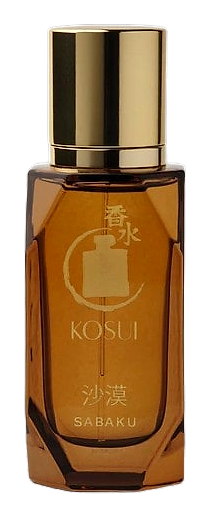
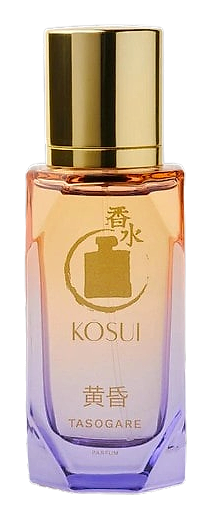
KosuiKōsui is a Japanese-inspired niche fragrance house founded by Warren Bacal. The brand draws on natural landscapes and cultural touchstones of Japan, from bamboo forests evocative of Arashiyama to the arid beauty of desert imagery seen in Sabaku, its debut oriental woody composition. Operating as an independent project, Kōsui positions itself within the growing field of culturally specific niche perfumery, where regional aesthetics guide scent direction rather than market trends. The house debuted in 2026 with three inaugural releases: Sabaku, Tasogare, and Kaifu.
The Creator
Yusuke MasudaMasuda favors transparent, airy structures with a pronounced mineral edge. Japanese ingredients anchor his palette: hinoki cypress, green tea, yuzu, and white musk appear frequently alongside French classics like Grasse jasmine and May rose.