
The Story
Why it exists.
The beginning
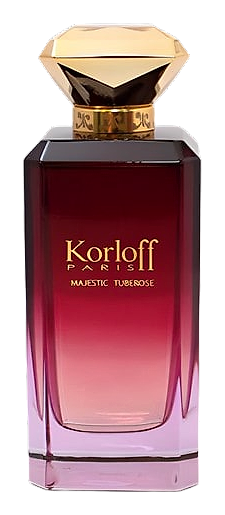
Korloff built its name on a black diamond and the discipline to cut it right. That precision carried into fragrance, each scent structured, each focal point deliberate. Majestic Tuberose arrived in 2016 as the house's answer to florals that apologize for being bold. Where other compositions softened their white blooms into something polite, this one let the tuberose speak at full volume. The brief was clear: if a diamond has presence, so should its scent.
Tuberose is one of the most demanding materials in perfumery, indolic, almost animalic at peak, capable of swinging between creamy warmth and aggressive heat depending on what surrounds it. Here, the choice was to amplify, not restrain. Warm spices, cardamom, clove, don't soften the tuberose. They argue with it. The ylang-ylang adds a tropical creaminess that makes the floral feel almost thick. Cashmere wood and sandalwood in the base don't ground it so much as embrace it, warm, soft, close. The whole composition works because it never tries to make tuberose something it isn't.
The evolution
First spray: mandarin brightness, then pink pepper's clean bite. Thirty seconds in, the cardamom arrives, warm, slightly sweet, almost resinous. The handoff to the heart is fast. Tuberose takes over by the two-minute mark, unapologetic and full. The clove makes itself known as a warm counterpoint, not a separate note. Ylang-ylang thickens the air. By the third hour, the citrus is gone. The floral heat has settled into something warmer, cushioned by sandalwood and cashmere wood. Patchouli lingers underneath, close to the skin, faintly earthy. At hour six, it's still there, quieter now, intimate, the kind of scent someone notices when they're standing beside you. On fabric, it holds longer. A faint warmth the next morning, like a room someone just left.
Cultural impact
The 2016 launch of Majestic Tuberose arrived during a resurgence of bold white florals in niche perfumery, challenging the trend of softened, mass-appealing tuberose compositions. Korloff Paris, a house rooted in high jewelry, extended its maximalist philosophy into fragrance with a tuberose that refuses to apologize for its indolic intensity. This release reflected a broader cultural moment where luxury consumers increasingly sought scents with distinct point of view over safe, universally pleasant compositions. The fragrance found favor among collectors who appreciated its unapologetic stance, contributing to a dialogue about what constitutes wearable art versus commercial appeal.