The Story
Why it exists.
The beginning
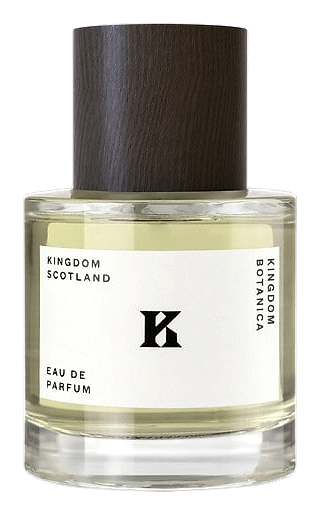
Kingdom Botanica was created to mark the 350th anniversary of the Royal Botanic Garden Edinburgh, a collaboration that runs deeper than a commemorative badge. The brief, if you could call it that, was simple: capture what happens when centuries of botanical knowledge meet contemporary fragrance craft. Perfumer Stephanie Anderson worked with the Royal Botanic Garden's living collection to build a fragrance that honors Scotland's botanical legacy, from the plant hunters of the past to the horticulturalists tending beds today. The result is a green-floral-woody eau de parfum that smells like discovery itself: cassis and ginger lily, sandalwood and vetiver, the smell of something wild made wearable. Launched in 2020, Kingdom Botanica is bold, botanical, and firmly gender-inclusive, a fragrance that doesn't ask permission to exist.
The top notes do the work you'd expect from a green floral, blackcurrant leaf, plum blossom, pine needle. But the ginger lily in the heart is where Kingdom Botanica earns its name. White ginger lily is a delicate note in most compositions; here, it holds weight. It arrives with myrrh and frankincense, materials that carry warmth and a faint resinous quality, the same aromatic territory, if not the same ingredient, that Scottish whisky-making explores through cask and time. That's the real craft move: using white florals to bridge green freshness and woody depth, so the transition never feels abrupt. The drydown, patchouli, sandalwood, vetiver, settles into something intimate and close. Not a room-filler.
The evolution
The opening announces itself clearly: green notes over cassis, a whisper of pink pepper. Blackcurrant leaf brings that specific green-fruity smell, not the candy, but the actual bush, stems and all. The pine needle surfaces briefly, then retreats. You get clean, bright, botanical for roughly the first hour. Then the heart takes over. White ginger lily, myrrh, frankincense, the florals here are warm, almost resinous. The shift feels deliberate rather than sudden, like walking deeper into a greenhouse and noticing the air has changed. The drydown is where patience pays off. Sandalwood, vetiver, and patchouli arrive together, grounded by amber and white musk. The texture softens. The sillage drops from moderate to intimate, present for the wearer, imperceptible to strangers across the room. Hours in, on fabric especially, there's still something there: earthy, woody, the faint sweetness of cedarwood. This is a fragrance that earns its longevity.
Cultural impact
Kingdom Botanica arrived at a moment when niche perfumery was shifting away from the heavy, syrupy florals that dominated the early 2000s. Scottish perfumers brought a different perspective, less about projection and more about presence. This fragrance draws on that tradition, using green notes not as an opening act but as the main event. The blackcurrant leaf note became something of a signature for houses working in this style, offering a tartness that cuts through sweetness without becoming aggressive. Plum blossom adds a softness that keeps it from feeling austere. The cultural moment here is about authenticity, the desire to smell like something that actually exists in nature rather than a laboratory interpretation of it.