The Story
Why it exists.
The beginning
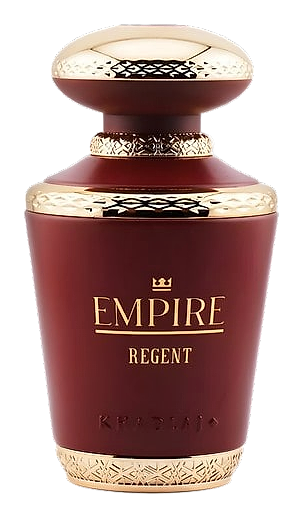
Empire Regent landed in 2024 as Khadlaj Perfumes' answer to something the Gulf fragrance market had been circling for years: a scent that felt like inherited luxury, not borrowed. The name alone tells you what it wants to be. Empire. Regent. Not whispered from the corner of a shop, announced from the center of the room. Khadlaj built its reputation on Dehn al Oud, rose, and musk. Empire Regent takes those signature materials and pushes them into something with more edges. More intention. The brief, if there was one, seems to have been simple: build a fragrance that earns its title. Saffron and leather. Two materials that don't apologize. They anchor the composition from the first second, pulling the rest of the pyramid into a conversation about warmth, heritage, and what it means to wear something that feels like it belongs to you, not like you picked it up because it was nearby. Rose and sandalwood soften the blow without softening the intent.
The structural logic here is worth sitting with. The top notes, saffron, bergamot, nutmeg, create an opening that reads as controlled heat. But then the heart opens up into something unexpected: lavender and rose working alongside patchouli and labdanum. That lavender is doing something unusual. It brings an herbal, almost green dimension that prevents the composition from becoming purely sweet or purely warm. The patchouli reinforces that grounding effect, pulling the rose down into earthier territory rather than letting it bloom upward into something prettier and less interesting. The base is where the real argument happens.
The evolution
The opening is immediate. Saffron's warm, slightly resinous quality hits first, pressing into the nose with the kind of confidence that doesn't wait for permission. Bergamot slips in alongside it, brightening the edges just enough to keep the saffron from feeling heavy. Nutmeg sits underneath, adding a spice that reads more as warmth than as heat. You've got maybe twenty minutes of this phase before the leather arrives. The heart phase is where Empire Regent earns its name. Lavender and patchouli take over, and the rose, present but not dominant, works as a bridge between the warm opening and the woody base that hasn't fully arrived yet. The labdanum adds a resinous, almost balsamic quality that gives the middle stage a complexity that rewards attention. This is the part of the fragrance that feels like it belongs to a specific person, not a demographic. The drydown is where cashmeran and sandalwood do their work. Creamy, soft, the kind of warmth that doesn't project aggressively but stays close to the skin. Leather lingers underneath, never fully disappearing.
Cultural impact
Wearers describe Empire Regent as the scent of someone who walks into a room and doesn't need to announce themselves. The comparison to Halfeti Leather surfaces regularly, not as a dismissal, but as a reference point for the leather-forward, spicy-woody character that both compositions share. Where Khadlaj's version differentiates itself is in the creaminess underneath: the cashmeran and sandalwood drydown that prevents the leather from overwhelming. It's a fragrance that attracts people who want character without the niche price tag. The kind of scent that gets noticed not because it's loud, but because it feels specific.