The Story
Why it exists.
The beginning
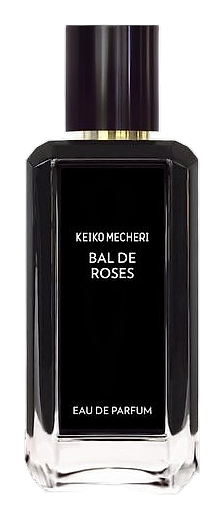
Bal de Roses exists because one flower wasn't enough. Keiko Mecheri's 2012 release takes the Bulgarian rose as its central obsession, but the composition refuses the usual soliflore template. Real May rose from Grasse anchors the formula, a variety produced in tiny quantities every year in the South of France. By definition, it meant limited production. That scarcity isn't marketing, it's the perfume's nature. The house wanted something that captured the true replica of roses, the kind of concentrated truth that only appears when you strip away everything ornamental and let a single flower speak at full volume.
What makes Bal de Roses structurally interesting is its restraint. The note pyramid is deceptively simple: rose at the top, rose in the heart, then a warm base of sandalwood, vanilla, and benzoin. No heavy woods, no competing florals, no green stem accord to complicate things. That simplicity is the point. The supporting materials, benzoin's balsamic warmth, tonka bean's cream, sandalwood's soft wood, don't decorate. They extend. They give the rose somewhere to live after the top notes settle. Petitgrain appears briefly at the opening, a flicker of bitter citrus that keeps the rose from feeling precious.
The evolution
The opening hits within seconds. Petitgrain's bitter citrus hangs for maybe twenty minutes before the Bulgarian rose takes over, and from that point the fragrance belongs entirely to the flower. The heart is where Bal de Roses earns its name, Bulgarian and Taif rose together, warm and deep, neither sharp nor watery. On most skin, that phase holds for three to five hours. The drydown doesn't arrive so much as settle. Benzoin and sandalwood arrive quietly, adding a powdery warmth that keeps the rose present without amplifying it. The vanilla and tonka bean make the base feel creamy, close to the skin rather than projecting outward. What lingers eight to ten hours later is soft, intimate, and unmistakably rose. On fabric, the sandalwood holds longest. On skin, the vanilla wins out.
Cultural impact
Bal de Roses occupies a specific corner of the niche rose landscape. It doesn't aim for the medicinal sharpness of La Fille de Berlin or the honeyed intensity of Attar de Roses, it's softer, powderier, and more approachable. Wearers describe it as the rose you reach for when you want something that lasts without announcing itself. The limited production of its Grasse rose absolute means it has always traded in small batches, appealing to collectors who value authenticity over ubiquity.