The Story
Why it exists.
The beginning
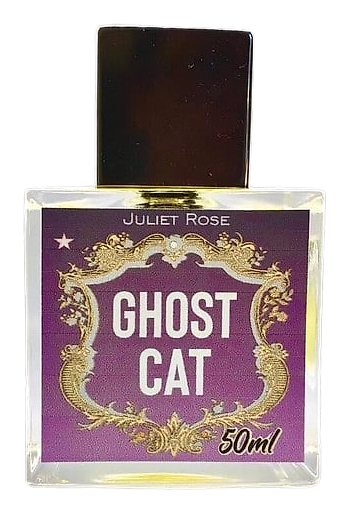
Ghost Cat is a fragrance built around atmosphere, a scent that conjures absence rather than presence, the trace of something that was here a moment ago and is already leaving. The composition is gothic in intention, shifting away from sweetness or comfort toward something colder and more suggestive. The name itself carries a riddle-like quality, hinting at an animal sensed rather than seen, a flicker at the edge of vision before it vanishes. Juliet Rose translated that flicker into scent: camphor, grass, petrichor, smoke, ash, and the mineral whisper of tarmac. Each note is chosen to evoke a moment of disappearance, the lingering outline of a creature that passed through and left only the impression of its path behind.
What makes Ghost Cat distinctive is its commitment to wet, mineral, and smoky registers, a vocabulary that resists easy categorisation. Petrichor, the scent of rain hitting dry ground, sits at the heart of the composition, flanked by wood smoke and oakmoss that give the fragrance its damp, ancient character. The base goes darker still: driftwood, white oud, cedarwood, vetiver, and ash, with a tarmac accord that brings an urban, slightly chemical edge into what could otherwise have been a pure woodland composition.
The evolution
The opening is sharp and bright, almost medicinal. White camphor and cut grass arrive first, with bergamot and lavender lending a brief aromatic lift. In its earliest moments, Ghost Cat reads as a clean, cool herbal fragrance, closer to a traditional fougère than to anything gothic. Then the heart takes over, and the temperature drops. Petrichor floods in, that unmistakable mineral sweetness of rain on warm earth, joined by oakmoss and a thread of wood smoke that curls underneath. The smoke deepens as the fragrance progresses through its stages, growing heavier and more resinous, settling into the base notes with a smouldering persistence. Over time, the grass and camphor that defined the opening fade, and what emerges from underneath is a darker architecture: ash, driftwood, and a faint urban bitterness from the tarmac accord.
Cultural impact
Ghost Cat has found its audience among collectors drawn to atmospheric, mood-driven composition, a fragrance that feels like weather rather than decoration. On independent fragrance forums, wearers describe it as herbal, rainy, and moody, with a pretty floral detail that softens the darker notes. It is a fragrance that rewards the curious, offering layers that unfold gradually rather than announcing themselves all at once. The composition has resonated with wearers who gravitate toward the unconventional, those who treat fragrance as an extension of personal aesthetic rather than a social accessory.