The Story
Why it exists.
The beginning
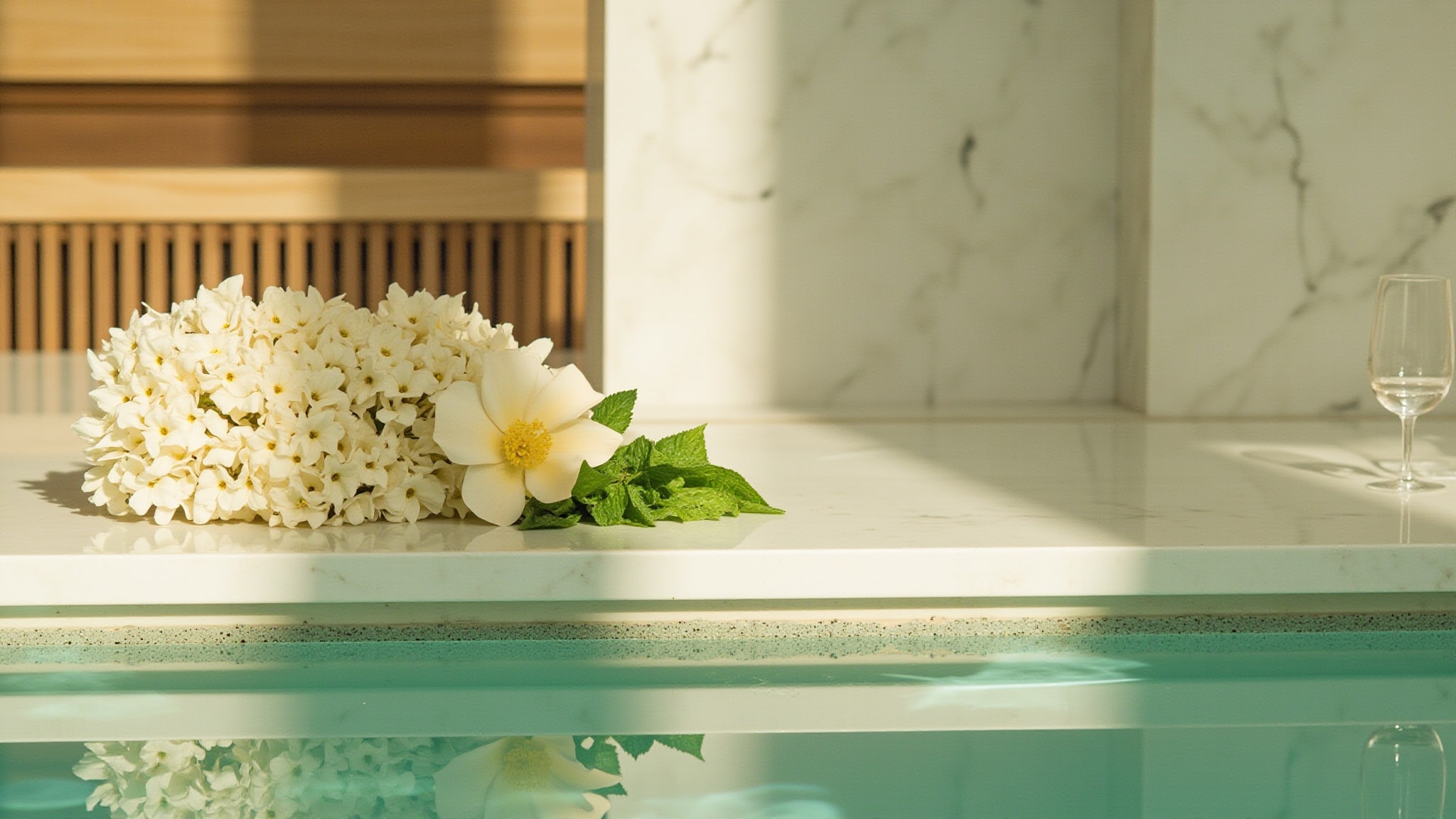
Songkran takes its name from the Thai New Year, that mid-April window when the country turns into one continuous water fight. Streets flood with people, strangers splash each other from trucks, and the air thickens with jasmine garlands offered at temples alongside the chili-lime chaos of street stalls. Songkran, the composition itself, reads like a sensory snapshot of those three days. A white-floral-meets-oud composition built around jasmine and gardenia, spiced with mint and star anise, carries that humid, jasmine-heavy quality the festival trades in. The jasmine is indolic and almost narcotic, gardenia adds a creamy peach-skin lushness, and the green-spicy lift from mint and star anise mirrors the cooling splash of water against sun-warmed skin.
The interesting move here is the structural tension between the top and the base. Gardenia and jasmine are creamy, almost narcotic white florals that carry a suntan-lotion warmth when they are not tamed by citrus. Oud anchors the composition with a dry, woody presence that reads more like aged temple wood than smoked leather, a faint incense hum rather than a statement. What runs through the middle is the sharper register. Mint and star anise, plus cardamom, introduce a cool, herbal-green lift that keeps the white florals from collapsing under their own weight.
The evolution
The opening is loud. Gardenia and jasmine arrive with that thick, humid warmth white florals carry when they are not tamed by citrus, almost like the scent of sunscreen on overheated skin. The mint cuts in fast, sharp and slightly cooling, with a green menthol edge that reads like crushed leaves rather than candy. Star anise follows close behind, pushing the composition toward something herbal and faintly medicinal, a licorice-bite underneath the florals. As the composition wears, the jasmine settles and reorganizes around the spices. The mint softens, losing its sharp edge and blending into a cooler haze. Cardamom rounds out the heart, warmer now, less sharp, more like a toasted pod held between fingers. Sandalwood begins to surface underneath, giving the middle phase a creamy, almost suede-like quality that smooths the transition from floral to base.
Cultural impact
Songkran's Thai New Year reference shapes the composition from the ground up. The floral-mid-year structure, jasmine and gardenia layered against mint, star anise, and cardamom, mirrors the sensory chaos of those three days: temple jasmine next to street-stall chili heat, the cool splash of water against the warm bite of grilled food. The oud and sandalwood in the base carry a quieter register, the kind of incense-and-wood warmth that drifts out of temple doorways and into the surrounding streets. The result is a composition that reads as specific rather than decorative, rooted in a particular national moment.