The Story
Why it exists.
The beginning
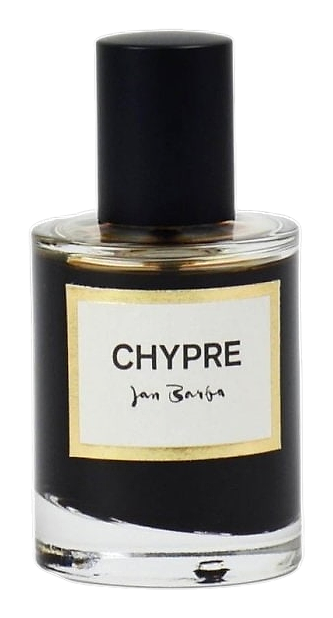
Chypre carries the weight of its name, and for Jan Barba that weight is the point. The genre is one of perfumery's oldest structures, a category built around contrasts: bright citrus over dark resin, green bitterness over animalic warmth, something civilized wrapped around something primal. Most modern chypres soften that tension, sand down the edges, and offer a version that plays well in polite company. Bartosz Puzio's take refuses the softening. The composition strips away oakmoss and rebuilds the spine of the genre around labdanum, styrax, and an overt animalic warmth that most contemporary chypres keep behind closed doors. There is no pretense of safety here, no attempt to round off what makes the category uncomfortable.
The name is the provocation. Chypre, in perfumery, carries centuries of weight, a word that signals a specific kind of construction and a specific kind of risk. Puzio's version refuses the formula while keeping the architecture. It leans into animalic notes that read as skin, as warmth, as something alive, where most modern chypres work hard to clean up the mess. There is an intentional roughness to the composition, a refusal of the polished and the predictable. It is a genre exercise done with a sledgehammer instead of a scalpel, and that rawness is the entire point.
The evolution
The first ten minutes are the coldest. Violet leaf cuts green and bitter, almost cucumber-cool, while bergamot adds a metallic brightness overhead. It smells clean in a way that feels deliberate, almost architectural. Then the florals arrive without asking permission. Damask rose, jasmine, tuberose push through the green, thickened by dried fruits that add a dark, preserved quality, like figs left too long in a jar. The leather announcement comes from styrax, smoky and sweet, and it never really leaves. By the two-hour mark, the violet and bergamot have faded to memory, and what remains is labdanum's amber density, animalic warmth pulsing beneath, and musk holding everything in a close grip. It sits close to skin rather than filling space, and the sillage stays intimate even as the hours pass.
Cultural impact
Chypre holds a specific place within Jan Barba's catalog, and it remains one of the compositions that defines how the house is perceived by those who follow it. The fragrance leans into the animalic warmth that the modern perfume industry tends to sand away, and it does so without apology. For wearers who treat polish as suspicious, who want their chypres to smell like something alive rather than something curated, Chypre offers a version of the genre that refuses to behave. It sits close to skin and carries the kind of density that announces itself without volume.