
The Story
Why it exists.
The beginning
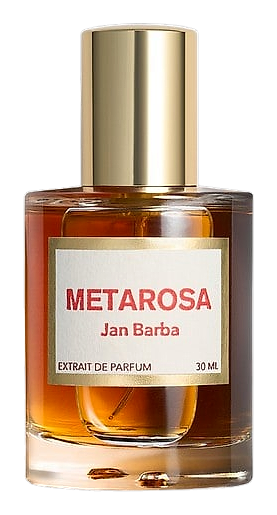
Metarosa arrived in 2021 as Bartosz Puzio's attempt to bottle a rose at its most intense. Not the romanticized version, the real one. Puzio wanted to capture the air around roses on a hot summer day, dense and slightly overwhelming, the kind of scent that fills a garden path before you've even turned the corner. The name itself, meta-rosa, the idea of a rose, points to the intent. This isn't a single rose note. It's the whole concept, translated into something you can wear.
What makes Metarosa unusual is the spatial ambition baked into the formula. The brand describes it as a fragrance where threads, individual notes, create a coherent whole rather than arriving in sequence and departing. The rose doesn't open, hand off to the heart, and disappear. It threads through the entire composition, changing character but never leaving. The iris and jasmine sambac provide the powdery middle ground that stops the rose from reading as sweet. The civet in the base adds warmth without aggression, an animalic undercurrent that grounds everything and ensures the drydown stays close to skin.
The evolution
The opening is immediate. Damask rose, bright and fresh for the first thirty minutes or so, with that characteristic green edge from the rose leaf in the heart. Then the powder arrives, iris doing its work, softening jasmine sambac into something velvety. The transition isn't dramatic. It's more like the garden shifting from morning to afternoon: same flowers, denser air. The base notes arrive gradually. Civet appears first, adding a subtle animalic warmth that bridges the florals to the woody drydown. Sandalwood and patchouli settle underneath, giving the fragrance somewhere to rest. Six to eight hours on most skin, moderate sillage, present when someone's standing close, absent from across the room. On fabric, it can linger until the next day. On skin, it fades to a quiet warmth.
Cultural impact
Metarosa occupies a specific position: contemporary niche rose that refuses to be polite. The 2021 launch arrived in a period when rose fragrances had returned to mainstream popularity, but most took the safe route, sweet, fresh, approachable. Puzio's composition added complexity: powdery iris, animalic civet, a spatial ambition that made the notes coexist rather than parade past. The reception has been divided in the way interesting fragrances always are. Some find the restraint frustrating, they want a rose that announces itself. Others find exactly what the brand intended: a rose that stays close, that rewards proximity, that earns its keep through depth rather than volume.