The Story
Why it exists.
The beginning
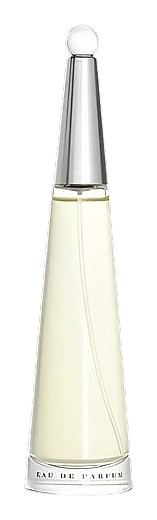
Jacques Cavallier-Belletrud returned to Issey Miyake in 2006, fourteen years after composing the original L'eau d'Issey. That debut had taken water as its conceptual core, the 1992 fragrance that made aquatic a category. But a decade and a half of wearing and reimagining had given both perfumer and house new ground to work. The EDP concentration meant he could deepen the structure, layer in materials that the lighter formulation couldn't support, and address what the original left unresolved. His brief was the same one Miyake had given from the beginning: take the idea of water and make it a scent worth wearing, not just a concept worth discussing. The result is an EDP that carries the house's clarity but adds warmth the original lacked.
Ambrette, musk mallow, is the quiet differentiator here. It's a natural vegetable source, not a synthetic, and it provides a warmth that synthetic musks approximate but rarely match. In the base of L'eau d'Issey EDP, ambrette does what it always does: it grounds the composition without weight, adds presence without projection. The other significant material is Calone, the aromatic molecule that gives aquatic fragrances their characteristic marine character. Cavallier-Belletrud uses it sparingly here, it's present in the opening but never dominates. What arrives is water that feels considered, not just generated.
The evolution
The opening is a clean, luminous thing: lotus and freesia in equal measure, Calone lifting the top with a translucent quality that reads as light rather than scent. For the first thirty minutes, this is the fragrance at its most transparent. Then the osmanthus arrives, a material with a fruity, almost pear-like character that changes the temperature without warming it. The lily of the valley anchors the heart, keeping the floral from becoming sweet. By hour two, the base materials arrive: cedar and sandalwood first, then ambrette settling underneath like a skin-warmth that wasn't there before. The drydown holds. Eight to ten hours on most skin. On the second day, cedar remains, the wood reads cleaner than most bases, less vanilla, more mineral.
Cultural impact
L'eau d'Issey arrived in 1992 as part of a wave of minimalist Japanese design that reshaped Western luxury in the early 1990s. Where Western perfumery leaned into opulence, Miyake's brief to Jacques Cavallier-Belletrud demanded something different: transparency, the scent of clean water, the memory of a mountain spring after rain. The original EDT became a touchstone for the 'clean' aesthetic that would later influence an entire generation of aquatic fragrances. The 2006 EDP deepened that brief without betraying it, adding warmth while maintaining the clarity that made the line iconic. In an era of maximalist designer fragrances, L'eau d'Issey remains a reference point for restraint and intentional minimalism.