The Story
Why it exists.
The beginning
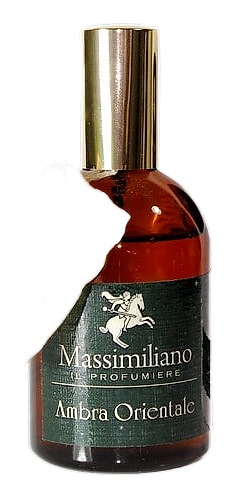
Ambra Orientale arrived in 2012 from Il Profumiere, with Massimiliano Torti composing its warm, resinous profile. The name points toward amber, but the fragrance treats that familiar idea more broadly. Orange, bergamot, clove, cumin, and geranium lend it a bright, aromatic quality, while ambergris, vanilla, benzoin, patchouli, and sandalwood contribute a plush depth. Castorium and powdery notes add a darker, more tactile dimension, and vetiver, nutmeg, lavender, and thyme round out the composition with herbal and woody nuances. The result is a unisex amber built around contrast: citrus and spice at one edge, sweetness and resin underneath, with smoke-like depth that registers as an undertow rather than a simple, single-note warmth.
What makes this composition worth noticing is the balance between polished warmth and rougher edges. The citrus notes bring a clean lift, while cumin, clove, and nutmeg introduce a sharper, savory heat. Patchouli adds an earthy shadow, castoreum lends a mineral-animal facet, and powdery notes soften the whole structure. Ambergris, vanilla, and benzoin contribute a rounded, resinous quality that sits comfortably alongside the spice.
The evolution
Ambra Orientale builds its impression from a broad spread of materials rather than a simple arc. Citrus and aromatic brightness come from orange, bergamot, geranium, lavender, and thyme, while clove, cumin, and nutmeg add a sharper savory heat to the blend. Ambergris, vanilla, benzoin, patchouli, sandalwood, and vetiver contribute a plush, resinous body, and the powdery, castoreum-tinged facet gives the whole composition a dry, darker edge. On skin, the character reads as warm and enveloping, with citrus and spice at the surface and a deeper amber texture underneath. The fragrance wears with a steady, close presence, leaving a soft impression that lingers on fabric.
Cultural impact
Ambra Orientale is a fragrance for women and men, and its character rests on a rich, layered amber profile rather than any single dominant note. Citrus and spice sit against ambergris, vanilla, benzoin, patchouli, sandalwood, and vetiver, while castoreum and powdery notes give the composition a darker, drier edge. The result is a broad, textured take on amber that rewards attention to detail: bright citrus at the surface, herbal green notes alongside it, and a warm, resinous body that carries the scent from the first impression into the hours that follow.
The House
Il ProfumiereIl Profumiere is an Italian niche perfume house that blends Florentine tradition with contemporary olfactory storytelling. The brand offers a curated catalogue of scents—such as Passiflora Rouge (2000) and Dubai Sahara (2008)—that aim to evoke specific places, memories, and moods. Each fragrance is presented as a compact, artful bottle, inviting collectors to explore a sensory map of Italy and beyond.
The Creator
Massimiliano TortiTorti’s signature technique, which he calls “olfactory stratification,” layers base, heart, and top accords in a way that invites the wearer to rearrange the perfume throughout the day. He favors natural absolutes, rare botanicals, and vintage extracts, often pairing Tuscan la…