The Story
Why it exists.
The beginning
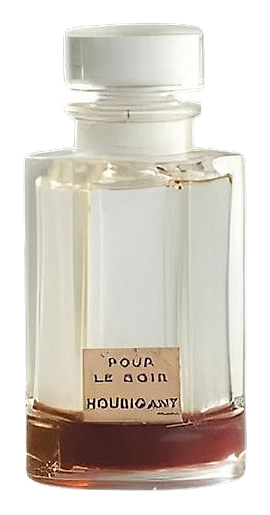
Pour Le Soir arrived in 1932. Houbigant chose a path that ran against expectation. The name translates to "for the evening," and the composition reads as an invitation to linger rather than to perform. A woman's fragrance for the hours after the event, when the room has thinned and the real conversation begins. There's a hush at its center, a quality that suggests the hours when no one is trying to be seen. The fragrance whispers where others declare. Little documented detail survives about the specific perfumer or formula, which only adds to the appeal. What is preserved is the mood: powdered, close, almost conspiratorial, a scent that belongs to the wearer rather than the room.
What makes Pour Le Soir distinctive within Houbigant's catalogue is its restraint. The house is known for landmark compositions that shaped entire categories, including Fougère Royale and Quelques Fleurs among others. Pour Le Soir doesn't claim that kind of category-defining status. It sits quieter, content to occupy the hours when bold statements have already been made and worn off. The powdered warmth and close-wearing character mark it as something composed for proximity rather than projection. It's a study in intimacy, not announcement.
The evolution
The first ten minutes are the most assertive Pour Le Soir gets. There's a brightness to the opening that catches you off guard if you've read about the powder before applying it. That opening is brief, deliberate, almost a clearing of the throat. Within twenty minutes the initial brightness softens into something more atmospheric, a sweetness that's warm rather than sharp, wrapped in the dry softness that powder brings when it meets skin. The composition stops performing and starts accompanying. The drydown is where this fragrance earns its name. What remains after the first hour is warmth, not sweetness: powder over skin, a trace of something that refuses to fully name itself, the ghost of whatever floral opening passed through. It doesn't fill a room. It doesn't try to. On fabric the next morning, the trace is faint, clean, and personal, the kind of thing only the wearer recognizes.
Cultural impact
Pour Le Soir holds a particular place among vintage French fragrances, one defined less by market presence than by the loyalty of those who know it. It belongs to a small canon of compositions that were never built for the department store counter, never designed to catch the eye of a passing shopper. Its value lies in the fact that it rewards those who seek it out, who understand what the name promises and what the hours after the event call for. Today it lives as a reference point for collectors and students of vintage French perfumery, a composition studied for what it chose to withhold as much as for what it offered.