
The Story
Why it exists.
The beginning
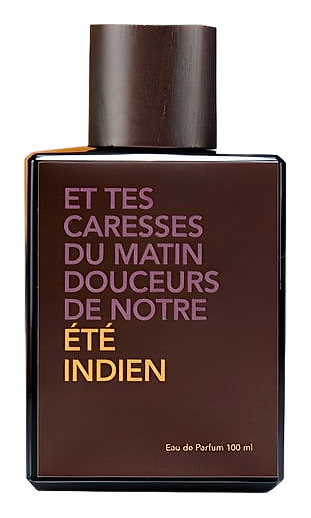
The name says it all. Été Indien, Indian Summer, describes a meteorological quirk: a stretch of summer-like warmth that arrives in autumn, after the season has already turned. Histoires d'Eaux, founded in France in 2000, built its identity on translating stories into scent. Each fragrance reads like a short narrative, and Été Indien tells the story of an unexpected return: warmth that comes back just when you'd stopped looking for it. Perfumer Dominique Gindre worked with that paradox from the start, building a composition that opens with citrus clarity then slowly pivots to something richer, more ambiguous, neither summer nor autumn, but occupying the space between them.
The heart of Été Indien rests on tolu balsam, a raw material that's uncommon in modern perfumery. Where benzoin or styrax appear more frequently in oriental compositions, tolu balsam brings a softer, almost floral balsamic quality, sweeter than Peru balsam, with a vanillic warmth that integrates naturally with the heart's patchouli and vanilla. This creates a mid-section that doesn't roar; it hums. The contrast between the bright, almost sharp citrus opening and this warm, powdery heart is where the fragrance lives. It's not a dramatic transformation, it's a quiet one, the kind you notice six hours later when someone asks what you're wearing.
The evolution
The opening announces itself clearly: lemon and bergamot cut through with elemi's resinous citrus and a whisper of geranium's green floral. Thirty minutes in, the citrus begins to recede, not fading, but making room. Clary sage and geranium shift the composition from bright to aromatic, creating a bridge between the top and heart notes that feels intentional rather than transitional. By the second hour, tolu balsam has arrived. Vanilla follows, rounding the edges. The patchouli adds depth without darkness. What was crisp becomes soft. By hour four, you're in the drydown: labdanum and styrax providing a resinous base that lingers close to the skin. Eight hours in, on fabric, there's a faint warmth, the ghost of vanilla, the memory of something that smelled like late afternoon light.
Cultural impact
Été Indien occupies an unusual position in the niche fragrance landscape: an oriental that doesn't announce itself as one. The citrus opening will draw in people who think they don't like oriental fragrances, while the warm, persistent drydown rewards those who stay. Its ambivalence is the point, much like the meteorological phenomenon that inspired its name.